Notes from Los Angeles, part two:
On the Raymond Chandler bus tour, we are taken into the Mayfair Hotel in downtown, where Chandler briefly lived. The proprietor comes out to inform us that the very first Oscars were held there. (This turns out to be a lie.) He also tells us that the hotel is booked up because of a convention for something called Nu Skin. A fellow Chandler fan whispers that Nu Skin is a pyramid selling scheme for cosmetics. Later, I go to In'N'Out Burger in Hollywood, and find myself in the queue behind 30 or 40 Japanese women in Nu Skin T-shirts. The burger is good, but I can't believe it does much for my complexion.
***
On Hollywood Boulevard, I pass a quiet group of demonstrators from The Church of God. They all wear close-fitting white shirts with the top button done up but no tie, which makes them look weirdly Dalston 2009.
***
Also on the Raymond Chandler tour, we stop at the Musso & Frank Grill, where Chandler, Fitzgerald, Hemingway and many other writers once drank. Faulkner used to go behind the bar to mix his own mint juleps. There is a bartender there who still remembers serving Bukowski. Again, we meet the proprietor, who says that he wants to turn it back into a literary destination. When I return later for a beer, I am inititally disappointed to find myself sitting next to two men who talk about nothing but "crazy" ex-girlfriends and bad films. But then it occurs to me that Hemingway and Fitzgerald must have been exactly the same.
***
Katsu-Ya in Studio City, widely regarded as the best sushi in town - and it is indeed very good - is tucked between a Domino's Pizza and Randy's Pet Discount Center in an anonymous strip mall. Apparently that is standard in Los Angeles.
***
I'm surprised the sunsets here don't cause more car accidents.
***
Venice Beach is full of legal cannabis dispensaries. I go there with a girl who used to carry a medical marijuana permit. She had no particular desire to get cannabis on prescription, it was just useful in case she ever got pulled over by the police when she happened to have a joint in her car - literally a get-out-of-jail-free card.
***
At a karaoke bar in Los Feliz, one table along from a nice-looking girl with "EVIL CUNT" tattooed across the backs of her thighs, I find out from a friend that he has now slept with at least two women in LA who have had their pubic hair lasered off. As in, so that it will never grow back. I had never even heard of this procedure. I have no specific objection, but I do think it's a useful signal that it might finally be time to move to rural Nepal.
***
Going to see Abe Vigoda at The Smell in downtown, I discover that the venue doesn't serve alcohol because it's all-ages. Apparently most of the kids who go there get wasted before they arrive. But the bands don't finish until 1:30am, by which time everyone has sobered up. It's like a London gig in reverse.
***
In fact, Californians, for the most part, don't seem to get drunk at all. Which makes you wonder, how does casual sex ever happen here? The answer, I assume, is that sometimes it's just the only way to get a lift home.
Tuesday, October 27, 2009

Thursday, October 22, 2009
Notes from Los Angeles, part one:
It's unnatural for a city to smell so good. The entire place feels like a house for sale in which the estate agent has lit an aromatherapy candle just prior to a viewing. Meanwhile, you stay locked in a staring contest with the daylight, waiting for it to blink, but it never does.
***
There is a white guard dog on the roof of Frank Lloyd Wright's Sturges House in Brentwood. There is also a white guard dog on the balcony of the colonial-style house opposite. They bark at each other hour after hour, staunch canine proxies for the architectural debates of the 20th century.
***
The serious young women at MOCA who discuss minimalism and Robert Frank with visiting groups of Latino grade school kids may be the closest thing I've ever seen to angels.
***
In the middle of the day, three deer saunter through the car park of the Jet Propulsion Laboratory in Pasadena. They are friendly but visitors are told not to stroke or feed them. The previous night I saw a coyote crossing the street up on Griffith Park. It was only the size of a medium dog. I had honestly thought that coyotes were as big as werewolves.
***
Later, in the space exploration museum at the Jet Propulsion Laboratory, we are shown a full-size replica of the Voyager spacecraft that was launched in 1977. It was wrapped in “black thermal blankets” to keep the electronics from freezing. As a result, it looks like something assembled in the back room of a biker bar.
***
Silverlake is now world famous as LA's Williamsburg/Hoxton; when in fact it comprises about five nice cafes, three vintage shops, and a comic shop.
***
My last meal would be albacore rolls from Yoshi's Sushi in West Hollywood followed by strawberry pancakes from Fred 62 in Los Feliz. Or maybe a few pounds of the spicy shrimp and clams from the Boathouse in Alhambra, which are dumped on the table in a big clear plastic sack full of blood-red sauce, like something from an organ transplant facility.
***
As it turns out, house parties in West Hollywood are not really any different from house parties in Camberwell, except that you are apparently allowed to dance to Maroon 5 and Matchbox 20 without irony.
It's unnatural for a city to smell so good. The entire place feels like a house for sale in which the estate agent has lit an aromatherapy candle just prior to a viewing. Meanwhile, you stay locked in a staring contest with the daylight, waiting for it to blink, but it never does.
***
There is a white guard dog on the roof of Frank Lloyd Wright's Sturges House in Brentwood. There is also a white guard dog on the balcony of the colonial-style house opposite. They bark at each other hour after hour, staunch canine proxies for the architectural debates of the 20th century.
***
The serious young women at MOCA who discuss minimalism and Robert Frank with visiting groups of Latino grade school kids may be the closest thing I've ever seen to angels.
***
In the middle of the day, three deer saunter through the car park of the Jet Propulsion Laboratory in Pasadena. They are friendly but visitors are told not to stroke or feed them. The previous night I saw a coyote crossing the street up on Griffith Park. It was only the size of a medium dog. I had honestly thought that coyotes were as big as werewolves.
***
Later, in the space exploration museum at the Jet Propulsion Laboratory, we are shown a full-size replica of the Voyager spacecraft that was launched in 1977. It was wrapped in “black thermal blankets” to keep the electronics from freezing. As a result, it looks like something assembled in the back room of a biker bar.
***
Silverlake is now world famous as LA's Williamsburg/Hoxton; when in fact it comprises about five nice cafes, three vintage shops, and a comic shop.
***
My last meal would be albacore rolls from Yoshi's Sushi in West Hollywood followed by strawberry pancakes from Fred 62 in Los Feliz. Or maybe a few pounds of the spicy shrimp and clams from the Boathouse in Alhambra, which are dumped on the table in a big clear plastic sack full of blood-red sauce, like something from an organ transplant facility.
***
As it turns out, house parties in West Hollywood are not really any different from house parties in Camberwell, except that you are apparently allowed to dance to Maroon 5 and Matchbox 20 without irony.
Wednesday, October 14, 2009
Today I was biked an annotated photocopy of Boxer, Beetle from Sceptre's excellent copy editor, whom I have never met and whose name I don't know but who has made lots of useful suggestions about word usage and commas and so on. I confess the experience of having a novel copy-edited reminds me a bit of the experience of realising that someone has fallen in love with you. In both cases it is alarming, almost sickening, but ultimately exhilarating to have another person pay such close attention to your most insignificant modes of operation. You find yourself not just willing but eager to make little changes, as a way of thanking them for caring so much.
Only little changes, though.
Only little changes, though.
Monday, October 05, 2009
Monday, September 28, 2009
The Carnival in 18th century Venice:
"The Carnival mask was not, as elsewhere, a simple affair covering mouth and eyes. In Venice it was a sort of enfolding cape or mantle with a black hood over the head and shoulders, the whole surmounted by a little tricorne hat. The actual mask is described as being 'closely modelled on the white mask of classical times, its beaked outline altering the face into that of some strange bird cut in chalk.'
Perfect for its purpose, the bautta became almost a uniform for Carnival. From Doge to kitchenmaid, everybody wore it, man, woman and child of every age and station. Servant-girls went masked to market, mothers carried babies in masks in their arms, the lawyer wore a mask to plead in court.
The long domino-cloak or tabarro so widely used in Venice was generally adopted at Carnival time. In the tabarro, unless a skirt should happen to show beneath the hem, it was impossible to tell the sexes apart, and so the women took care to lengthen their dominoes until they swept the ground. In the whole packed Piazza di San Marco no one could be known or recognised again, unless perhaps it were Casanova and those who, like him, affected the display of a gold-braided velvet coat under the half-open tabarro.
But he and his friends were eccentrics and all the rest were agreed and determined on concealment. If a woman knew whose chatter she was listening to, whether he were a senator or her own shoe-maker, it would ill become her to give any sign of recognition. A man would never hint that he recognised a woman; she would have broken off the encounter at once. It was just not done to indicate that you had pierced a disguise, and when someone spotted the Papal Nuncio in bautta and tabarro and besought immediate blessing everybody, as Montesquieu recalls, was dreadfully shocked.
Watertight anonymity was in fact the great lure of the Carnival, the relish that made it what it was. Goldoni calls the mask 'the most advantageous thing in the world', and there was nothing a masker dared not do. Before him difficulties melted away. Whoever he might be, he could join any company, go into any salon, sit down to cards, take part in the conversation, pay women extravagant compliments. Women, for their part, could walk about as they fancied, enter the cafes or the lowest haunts there were, and have unmentionable adventures. Maskers could even get into the convents whenever they wanted to. Who was to forbid them, when nobody could possibly tell whether they were male, female, rogues and vagabonds or authority personified. There were neither rich nor poor, police nor facchini. There was only Sior Maschera, and who was to set limits for that faceless personage? Noble and commoner were confounded as Casanova says, 'prince with subject, the ordinary with the remarkable man, lovely and hideous together. There were no longer valid laws, nor law-makers.' Difference was obliterated, the social structure cancelled out. Dissembling was suddenly good behaviour and deviousness a merit, as the elite of the underworld rubbed shoulders were the worthier multitude."
from Daily Life in Venice in the Time of Casanova by Maurice Andrieux
"The Carnival mask was not, as elsewhere, a simple affair covering mouth and eyes. In Venice it was a sort of enfolding cape or mantle with a black hood over the head and shoulders, the whole surmounted by a little tricorne hat. The actual mask is described as being 'closely modelled on the white mask of classical times, its beaked outline altering the face into that of some strange bird cut in chalk.'
Perfect for its purpose, the bautta became almost a uniform for Carnival. From Doge to kitchenmaid, everybody wore it, man, woman and child of every age and station. Servant-girls went masked to market, mothers carried babies in masks in their arms, the lawyer wore a mask to plead in court.
The long domino-cloak or tabarro so widely used in Venice was generally adopted at Carnival time. In the tabarro, unless a skirt should happen to show beneath the hem, it was impossible to tell the sexes apart, and so the women took care to lengthen their dominoes until they swept the ground. In the whole packed Piazza di San Marco no one could be known or recognised again, unless perhaps it were Casanova and those who, like him, affected the display of a gold-braided velvet coat under the half-open tabarro.
But he and his friends were eccentrics and all the rest were agreed and determined on concealment. If a woman knew whose chatter she was listening to, whether he were a senator or her own shoe-maker, it would ill become her to give any sign of recognition. A man would never hint that he recognised a woman; she would have broken off the encounter at once. It was just not done to indicate that you had pierced a disguise, and when someone spotted the Papal Nuncio in bautta and tabarro and besought immediate blessing everybody, as Montesquieu recalls, was dreadfully shocked.
Watertight anonymity was in fact the great lure of the Carnival, the relish that made it what it was. Goldoni calls the mask 'the most advantageous thing in the world', and there was nothing a masker dared not do. Before him difficulties melted away. Whoever he might be, he could join any company, go into any salon, sit down to cards, take part in the conversation, pay women extravagant compliments. Women, for their part, could walk about as they fancied, enter the cafes or the lowest haunts there were, and have unmentionable adventures. Maskers could even get into the convents whenever they wanted to. Who was to forbid them, when nobody could possibly tell whether they were male, female, rogues and vagabonds or authority personified. There were neither rich nor poor, police nor facchini. There was only Sior Maschera, and who was to set limits for that faceless personage? Noble and commoner were confounded as Casanova says, 'prince with subject, the ordinary with the remarkable man, lovely and hideous together. There were no longer valid laws, nor law-makers.' Difference was obliterated, the social structure cancelled out. Dissembling was suddenly good behaviour and deviousness a merit, as the elite of the underworld rubbed shoulders were the worthier multitude."
from Daily Life in Venice in the Time of Casanova by Maurice Andrieux
Thursday, September 24, 2009
Two interesting passages from Designing and Making Stage Scenery by Michael Ware:
"The historian Pollux, writing in the second century AD, tells us of some of the machinery used in the Greek theatres. He mentions trap-doors, hoists, cranes, lightning and thunder machines, devices for revealing dead bodies – rolled or swung out on what today we would call 'trucks' or 'wagons'. He also describe the Piraktoi which were revolving prisms painted differently on each facet, and the Mechane for lowering a god at the appropriate moment. Whether all these devices were used by the Greeks in the fifth century BC is doubtful, though we do know that dead bodies had to be revealed mechanically as slaughter was not allowed on the stage; and we know that Euripides lowered the occasional god from above to round off the action of the play."
"In Italy and France the enthusiasm for the theatre of illusion and of spectacle had led to a diminished interest in the drama and an increase of interest in the proliferation of design for opera and ballet. Architects began to specialise in designing scenery. It was very profitable. Vast opera houses were being constructed by princes all over Europe to keep up with the other princes. It is an arguable point whether the building of opera houses is more conducive to the harmony of humanity than the making of nuclear bombs, but in the seventeenth century rivalry was confined the explosion of new scenic devices. Giacomo Torelli was the first artist to specialise in designing scenery; some of his effects were so astute that it was rumoured in Venice that he was in league with the devil, which shows the power of the dedicated designer."
"The historian Pollux, writing in the second century AD, tells us of some of the machinery used in the Greek theatres. He mentions trap-doors, hoists, cranes, lightning and thunder machines, devices for revealing dead bodies – rolled or swung out on what today we would call 'trucks' or 'wagons'. He also describe the Piraktoi which were revolving prisms painted differently on each facet, and the Mechane for lowering a god at the appropriate moment. Whether all these devices were used by the Greeks in the fifth century BC is doubtful, though we do know that dead bodies had to be revealed mechanically as slaughter was not allowed on the stage; and we know that Euripides lowered the occasional god from above to round off the action of the play."
"In Italy and France the enthusiasm for the theatre of illusion and of spectacle had led to a diminished interest in the drama and an increase of interest in the proliferation of design for opera and ballet. Architects began to specialise in designing scenery. It was very profitable. Vast opera houses were being constructed by princes all over Europe to keep up with the other princes. It is an arguable point whether the building of opera houses is more conducive to the harmony of humanity than the making of nuclear bombs, but in the seventeenth century rivalry was confined the explosion of new scenic devices. Giacomo Torelli was the first artist to specialise in designing scenery; some of his effects were so astute that it was rumoured in Venice that he was in league with the devil, which shows the power of the dedicated designer."
Friday, September 11, 2009
 From Nabokov's introduction to his second novel King, Queen, Knave:
"One might readily conjecture that a Russian writer in choosing a set of exclusively German characters (the appearances of my wife and me in the last two chapters are merely visits of inspection) was creating for himself insurmountable difficulties. I spoke no German, had no German friends, had not read a single German novel either in the original, or in translation. But in art, as in nature, a glaring disadvantage may turn out to be a subtle protective device... I felt no inclination to persevere in a technique assignable to the French "human document" type, with a hermetic community faithfully described by one of its members - something not unsimilar, in a small way, to the impassioned and boring ethnopsychics which depress one so often in modern novels. At a stage of gradual inner disentanglement, when I had not yet found, or did not yet dare apply, the very special methods of re-creating a historical situation that I used ten years later in The Gift, the lack of any emotional involvement and the fairytale freedom inherent in an unknown milieu answered my dream of pure invention."
Saturday, September 05, 2009
"De Moivre wrote a book on probability theory, The Doctrine of Chances, said to have been prized by gamblers. It is reported in all seriousness that de Moivre correctly predicted the day of his own death. Noting that he was sleeping 15 minutes longer each day, De Moivre surmised that he would die on the day he would sleep for 24 hours. A simple mathematical calculation quickly yielded the date, 27 November 1754. He did indeed die on that day."
Friday, August 14, 2009
'The CIA never quite grasped Sukarno. But the agency's authority under NSC 5518 was so broad that it could justify almost any action against him.
The CIA's new Far East division chief, Al Ulmer, liked that kind of freedom. It was why he loved the agency. "We went all over the world and did what we wanted," he said forty years later. "God, we had fun."
By his own account, Ulmer had lived high and mighty during his long run as station chief in Athens, with a status somewhere between a Hollywood star and a head of state. He had helped Allen Dulles enjoy a romantic infatuation with Queen Frederika of Greece and the pleasures of yachting with shipping magnates. The Far East division was his reward.
Ulmer said in an interview that he knew next to nothing about Indonesia when he took over the division. But he had the full faith and trust of Allen Dulles.'
- from Legacy of Ashes by Tim Weiner
The CIA's new Far East division chief, Al Ulmer, liked that kind of freedom. It was why he loved the agency. "We went all over the world and did what we wanted," he said forty years later. "God, we had fun."
By his own account, Ulmer had lived high and mighty during his long run as station chief in Athens, with a status somewhere between a Hollywood star and a head of state. He had helped Allen Dulles enjoy a romantic infatuation with Queen Frederika of Greece and the pleasures of yachting with shipping magnates. The Far East division was his reward.
Ulmer said in an interview that he knew next to nothing about Indonesia when he took over the division. But he had the full faith and trust of Allen Dulles.'
- from Legacy of Ashes by Tim Weiner
Glad to see that someone else has typed up "Hollywood Elegies", a terrific poem by Brecht, so I don't have to.
Thursday, July 30, 2009
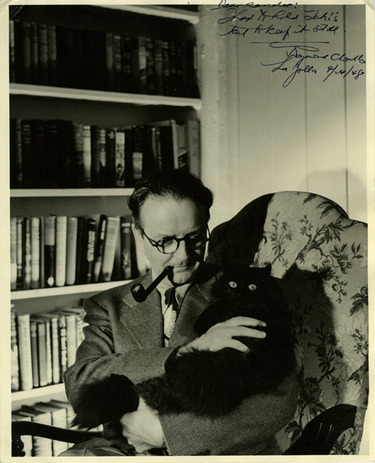 From the novella “Red Wind” (1938) by Raymond Chandler:
“Seen a lady in here, buddy? Tall, pretty, brown hair, in a print bolero jacket over a blue crepe silk dress. Wearing a wide-brimmed straw hat with a velvet band.”
Later:
I was thinking that Waldo had described the girl's clothes in a way the ordinary man wouldn't know how to describe them. Printed bolero jacket over blue crepe silk dress. I didn't even know what a bolero jacket was. And I might have said blue dress or even blue silk dress, but never blue crepe silk dress.
Later:
There was a tall girl standing there waiting for the car. She had brown wavy hair under a wide-brimmed straw hat with a velvet band and loose bow. She had wide blue eyes and eyelashes that didn't quite reach her chin. She wore a blue dress that might have been crepe silk, simple in lines but not missing any curves. Over it she wore what might have been a print bolero jacket.
We never actually do find out why Waldo has such an eye for ladies' fashions. The narrator's hunch is just left dangling. I don't think it matters, though, because Chandler is making a self-referential point about his craft: noir writers like him do have a strange, almost obsessive-compulsive tendency to pick through every little detail of a character's outfit when that character is introduced. He must have thought it was strange himself, because he acknowledges that here, but he must have thought it was necessary, too, because he kept doing it.
Monday, July 20, 2009
Last week I finished The Power Broker, Robert Caro's 1974 biography of Robert Moses. I started reading it because there is a character in my forthcoming novel Boxer, Beetle loosely based on Moses, but of course I wouldn't have spent 18 months getting through a 1,200 page book just to research a minor character unless the book had been rewarding in its own right. In fact, it is not just one of the best books I've ever read, it's probably one of the most rewarding experiences of any kind I've ever had in my life. There are a tremendous number of things I would like to say about it, but for the moment I'm just going to link to this great, lengthy conversation between Caro and Kurt Vonnegut from 1999. It includes an anecdote about how, when Caro had trouble getting Lyndon Johnson's brother Sam Houston to be frank about his early life, he took him back to a precise replica of his boyhood home that was maintained by the National Park Service, sat him down in his accustomed seat at the dining room table, and got him talking! Now that is journalism. And also quite creepy.
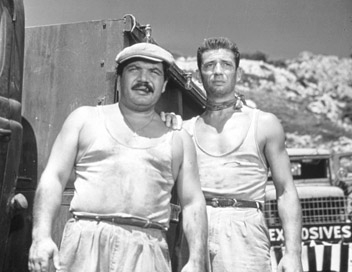 Some notes on Clouzot's The Wages of Fear (1953)
1. Those two (above) are called Mario and Luigi. What are the chances? Unfortunately, the one who looks like Super Mario is called Luigi, and the one called Mario looks like no particular video game character that I'm aware of.
2. The film has a lot in common with Roger Vailland's existentialist novel 325,000 Francs, from three years later. Both are about men who are willing to take banal but incredibly dangerous jobs with big companies for the promise of a better life. But in the end, I think, they're not about dangerous jobs in particular, or even globalised corporate exploitation, but just the very notion of paid work: the sheer horror, the sheer agony, of being trapped for the rest of your life in a room, with strangers, doing something meaningless. Loss of limbs, which takes place in both, is just a metaphor for the loss of your youth and your optimism. I think we can take it that French guys in the 50s did not go to the office with a spring in their step and a song on their lips.
3. The town in which the first hour of the film is set could almost be the same one as in Cyril Connolly's underappreciated only novel, The Rock Pool (1936) - a provincial outpost of purgatory.
4. There is a scene in The Wages of Fear where a driver can't let his speed drop below 40mph or his vehicle will explode. Why might that be familiar?
5. This film is AMAZING.
Friday, July 10, 2009
"In general, I think it can be said that most sections of the United States were first populated by failures. They are usually referred to as 'pioneers', but that euphemism doesn't dispose of the fact that they were doing very badly where they were, and pulled up stakes to see if they couldn't do better somewhere else."
- James M. Cain, "Paradise"
- James M. Cain, "Paradise"
Subscribe to:
Posts (Atom)