
Sunday, June 14, 2015

Tuesday, May 19, 2015
Every author's dream
'Koestler himself was soon benefiting from the Information Research Department’s propaganda campaigns. Darkness at Noon, whose depiction of Soviet cruelty had established Koestler’s credentials as an anti-communist, was circulated in Germany under its auspices. In a deal struck with Hamish Hamilton, director of the the eponymous publishing house and himself closely tied to intelligence, 50,000 copies were purchased and distributed by the Foreign Office in 1948. Ironically, at the same time, “the French Communist party had orders to buy up every single copy [of the book] immediately and they were all being bought up and there was no reason why it should ever stop being reprinted, so in this way K[oestler] was being enriched indefinitely from Communist Party funds."'
from Who Paid the Piper? by Frances Stonor Saunders, quoting Living with Koestler by Mamaine Koestler
Sunday, May 17, 2015
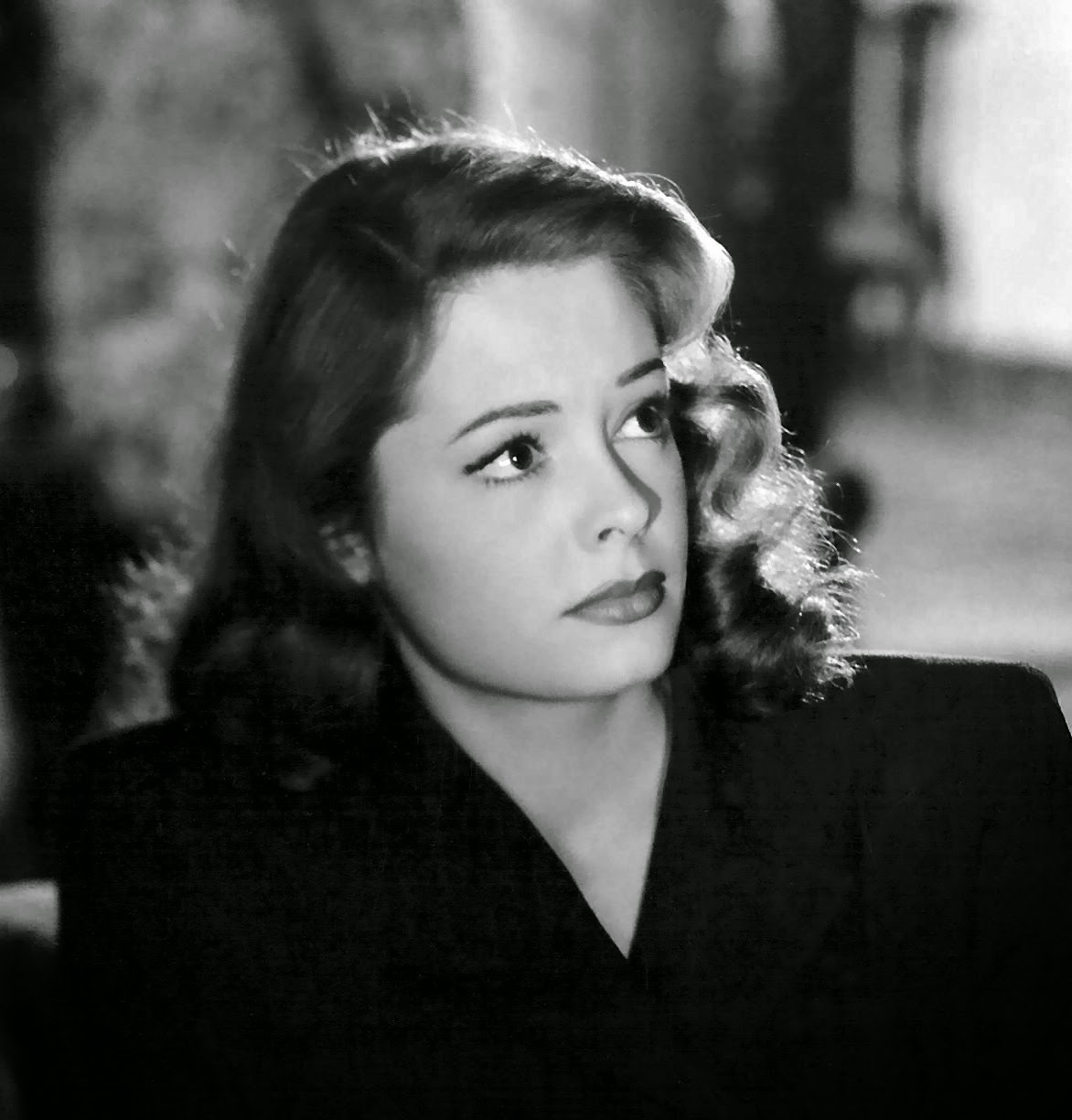
When The Big Steal came along, Robert Mitchum had been arrested for possessing marijuana and his leading lady Lizabeth Scott already had her wardrobe. But when she found out he had to go to jail, she said, “I don’t want to do it.” So they were trying to find someone to work with him, because they wanted to go down to Mexico the next Tuesday. Well, the phone rang, and it was Howard.
“Bettejane” – he always called me Bettejane – “Bettejane, are you interested in doing this picture with Bob Mitchum?”
I said, “I’d love to, Howard. I love Bob, you know that, I worked with him and I’d love to work with him again.”
He said, “Well then, all right, but you’d have to wear Lizbeth Scott’s wardrobe. You leave next Tuesday.”
“All right.”
“You have anything else to tell me?”
I said, “No, I don’t think so.”
“You liar, you’re pregnant! You’re knocked up!”
I said, “Am I?”
“Yes!”
I said, “I didn’t know, they haven’t called me yet. I did take a test, but I haven’t gotten the result of the test yet.”
“Well, I got it, and you’re knocked up.”
from Movies Were Also Magical by Leo Verswijver
Thursday, May 14, 2015
Tuesday, April 21, 2015

Wednesday, March 25, 2015
"Excitability is a natural, physical property of nerve cells. In every neuron, the membrane potential undergoes ceaseless fluctuations in voltage. Those fluctuations are due in large part to the random release of vesicles of neurotransmitters at some of the neuron synapses. In the final analysis, this randomness arises fron thermal noise, whitch constantly rocks and rolls our mollecules around. One would think that evolution would minimize the impact of this noize, as engineers do in digital chips, when they set very distinct voltages for 0s and 1s that thermal noise cannot offset them. Not so in the brain: neurons not only tolerate noise but even amplify it – probably because some degree of randomness is helpful in many situations where we search for an optimal solution to a complex problem.
Whenever a neuron's membrane fluctuations exceed a threshold level, a spike is emitted. Our simulations show that these random spikes can be shaped by the vast sets of connections that link neurons into columns, assemblies, and circuits, until a global activity pattern emerges. What starts out as local noise ends up as a structured avalanche of spontaneous activity that corresponds to our covert thoughts and goals. It is humbling to think that the 'stream of consciousness,' the words and images that constantly pop up in our mind and make up the texture of our mental life, finds its ultimate origin in random spikes sculpted by the trillions of synapses laid down during our lifelong maturation and education."
from Consciousness and the Brain by Stanislas Dehaene
Friday, March 20, 2015
"Geese with their exceptional eyesight and wide field of vision, combined with their strident voices, make excellent guards against approaching strangers or predators since outsiders cannot calm them into silence. This was shown in 390 BC, when Rome was attacked by Gallic troops. It was the alertness of the holy geese housed in the temple of the city's fort that allowed the defenders to wake in time to resist the attacking enemy. Today, in the high Andes, Southeast Asia and many other places, geese replace guard dogs. In Europe, they are used to guard whiskey warehouses and sensitive military installations."
Saturday, March 07, 2015
From the Oxford English Dictionary entry for the adjective "ebon":

Pretty humiliating for Elizabethan poet Giles Fletcher that this mistake is still in the dictionary 420 years later.
One of the only other uses of the phrase "ebon thighs" that I could find is in this collection of (vile but interesting) racist satirical poems about the alleged sexual relationship between President Thomas Jefferson and his slave Sally Hemings.
Friday, March 06, 2015
"Metallic siege money of Leyden [was] struck in 1574 from a round coin die onto a diamond shaped silver planchet. As the supply of silver available for coinage dried up during the siege, Leyden continued to mint coins made from paper torn from prayer books. These cardboard 'notes' became the first paper money to appear in the Western world. Prior to this only the Chinese used paper money."
from "Siege Notes" by John E. Sandrock

"The latest use of leather for regal currency in Europe appears to be that of Russia. From about the eighth century onwards, as the commerce of that country expanded, and the supply of hides for exchange or barter purposes failed to keep pace with the monetary requirements of the people, the use of whole skins was discontinued, and skin snouts, ears and claws were substituted. These, in turn, gave place to pieces of skin or leather, which at first were of irregular shape about an inch square in size, but were afterwards issued in a circular form, and impressed with the government stamp. They continued in use until the reform of the currency in the latter part of the reign of Peter the Great, who died in 1725."
from "Leather Currency" by William Charlton
from "Siege Notes" by John E. Sandrock
"The latest use of leather for regal currency in Europe appears to be that of Russia. From about the eighth century onwards, as the commerce of that country expanded, and the supply of hides for exchange or barter purposes failed to keep pace with the monetary requirements of the people, the use of whole skins was discontinued, and skin snouts, ears and claws were substituted. These, in turn, gave place to pieces of skin or leather, which at first were of irregular shape about an inch square in size, but were afterwards issued in a circular form, and impressed with the government stamp. They continued in use until the reform of the currency in the latter part of the reign of Peter the Great, who died in 1725."
from "Leather Currency" by William Charlton
Saturday, January 31, 2015

Incidentally, those of you who've already read Glow may remember a mention of Linnaeus' horologium florae or flower clock. This weekend the New York Times' Michael Tortorello has published a wonderfully thorough article on that subject, in which I am briefly quoted.

Thursday, January 29, 2015
On the use of beheadings by the Zetas drug cartel in Mexico, from El Narco by Ioan Grillo:
"It is still unclear exactly what inspired such brutality. Many point to the influence of the Guatemalan Kaibiles working in the Zetas. In the Guatemalan civil war, troops cut off heads of captured rebels in front of villagers to terrify them from joining a leftist insurgency. Turning into mercenaries in Mexico, the Kaibiles might have reprised their trusted tactic to terrify enemies of the cartel. Other point to the influence of Al Qaeda decapitation videos from the Middle East, which were shown in full on some Mexican TV channels. Some anthropologists even point to the pre-Colombian use of beheadings and the way Mayans used them to show complete domination of their enemies."
"It is still unclear exactly what inspired such brutality. Many point to the influence of the Guatemalan Kaibiles working in the Zetas. In the Guatemalan civil war, troops cut off heads of captured rebels in front of villagers to terrify them from joining a leftist insurgency. Turning into mercenaries in Mexico, the Kaibiles might have reprised their trusted tactic to terrify enemies of the cartel. Other point to the influence of Al Qaeda decapitation videos from the Middle East, which were shown in full on some Mexican TV channels. Some anthropologists even point to the pre-Colombian use of beheadings and the way Mayans used them to show complete domination of their enemies."
Sunday, January 25, 2015
'During the
1930s, many articles appeared that claimed illustrators' – meaning conversational gestures – 'were inborn and that the "inferior races," such as the Jews
or gypsies, made many large, sweeping illustrators compared
to the "superior," less gesturally expansive Aryans.
No mention was made of the grand illustrators shown by
Germany's Italian ally! David Efron, an Argentinian Jew
studying at Columbia University with the anthropologist
Franz Boas, examined the illustrators of people living on
the Lower East Side of New York City. He found that
immigrants from Sicily used illustrators that draw a picture
or show an action, while Jewish Lithuanian immigrants
used illustrators that give emphasis or trace the flow
of thought. Their offspring born in the United States who
attended integrated schools did not differ from one another
in the use of illustrators. Those of Sicilian parentage used illustrators similar to those used by children of Jewish
Lithuanian parents. The style of illustrators is acquired, Efron showed, not inborn.'
from Telling Lies by Paul Ekman
from Telling Lies by Paul Ekman
Monday, December 29, 2014
Monday, December 08, 2014

Above: Erasistratus the Physician Discovers the Love of Antiochus for Stratonice by Benjamin West (1772)
"By the time of Erasistratus, the celebrated Greek physician and anatomist (300-250 B.C.), we find very definite attempts to detect deceit and these, interestingly enough, appear relatively objective in method (i.e., feeling the pulse). One such attempt is related by Plutarch and others. It concerned the love of Antiochus for his step-mother, Stratonice, and his efforts to conceal it from his father, Seleucus I of Syria, surnamed Nicator.
"Nicator, formerly a general in the conquering army of Alexander the
Great, had married the beautiful Stratonice. Sometime after this
marriage, Nicator's son (of a former wife), Antiochus, began to lose
weight and to languish in an unknown disease. Nicator, whose
associations with Alexander the Great had made him familiar with
Alexander's respect for learning, decided to patronize learning
himself and to look about for a capable physician who could cure his
son's ailment. He called to his court Erasistratus, who had gained
renown for his discussions of the functions of the brain and nervous
system.
"When Erasistratus arrived at the court he acted on the
current suspicion that Antiochus may have developed a consuming
passion for the beautiful woman his father had married. In discussing
with Antiochus the virtues of Stratonice he found occasion to feel
Antiochus' pulse, and its tumultuous rhythm made him sure of his
suspicions. Consequently Erasistratus informed the monarch that
Antiochus was infatuated by Stratonice. Indeed, significant
circumstantial evidence was to support this diagnosis: the second
Stratonice was begotten of the intimacies of Antiochus and the Queen."
from "A History of Lie Detection" by Paul V Trovillo
But when Father Brown is told about a "pulsometer" in G.K. Chesterton's story "The Mistake of the Machine" (1914):
"'What sentimentalists men of science are!' exclaimed Father Brown, 'and how much more sentimental must American men of science be! Who but a Yankee would think of proving anything from heart-throbs? Why, they must be as sentimental as a man who thinks a woman is in love with him if she blushes. That's a test from the circulation of the blood, discovered by the immortal [William] Harvey; and a jolly rotten test, too.'"
Subscribe to:
Posts (Atom)