Tuesday, December 28, 2010

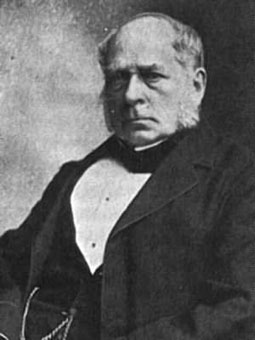
In Paul Collins' delightful Banvard's Folly I have just come across the story of Victorian inventor Henry Bessemer, who went to great lengths to protect his steam-powered machine for the manufacture of cheap bronze powder from industrial espionage. It's like something from Pynchon! From his memoirs:

'Up to this juncture the details of my invention and the nature of the several machines used in the process were an absolute secret, and I feared to patent these inventions: firstly, because they might be modified or improved by others, but chiefly because secret machinery could be erected abroad, and the article smuggled into this country without fear of detection, because powder cannot be identified as having been made by any special machinery. Thus, a patent would have afforded no protection whatever to me. Then came the difficult question of continued secrecy; there were powerful machines of many tons in weight to be made; some of them were necessarily very complicated, and somebody must know for whom they were. The result of a review of all these difficulties was this:

Firstly, we both agreed that if brass were still to be sold at a higher price than silver, it would be impossible for us to maintain this price if all the details of my system were shown and described in a patent blue-book, which anyone could buy for six pence. This fact absolutely decided me not to patent the invention.

Secondly, how could we trust workpeople who could have a thousand pounds or so given them at any time for an hour or two's talk with a rival manufacturer? This difficulty we proposed to meet by engaging, at high salaries, my wife's three young brothers, on whom we felt we could entirely rely; so this point was satisfactorily arranged.

Thirdly, how about making these massive machines? What engineers could we trust? -- for any engineer must have such work done in his workshops open to the eyes of all his men.

Fortunately, here I was enabled to step in.I could undertake personally to make, not only all the general plans, but also each of the working drawings, to a large scale, for each of the machines required; and when I had thus devised and settled every machine as a whole, I undertook to dissect it and make separate drawings of each part, accurately figured for dimensions, and to take these separate parts of the several machines and get them made: some in Manchester, some in Glasgow, some in Liverpool, and some in London, so that no engineer could ever guess what these parts of machines were intended to be used for. Of course, I was able to undertake the proper fitting together of all these detached parts after they had arrived in London[...]

After much personal labour and study, this part of the undertaking was accomplished, and the making of all the machines was commenced. Meanwhile, I sought for quiet, unobtrusive premises, with sufficient land to build a factory and engine-house, and on which there was also a dwelling-house for myself and family: for such premises must not be left unguarded either by day or night. In the quiet suburb of St. Pancras I found just what I wanted, viz., an old-fashioned, unostentatious, but comfortable house, lying some distance back from the high road, and having a large garden in the rear. Such was old "Baxter House," the scene of so many experiments, and the birthplace of several entirely new manufactures.

The ground for the factory having been chosen, and a long lease of the premises obtained, I had next to plan the necessary buildings. One or two cardinal points were first determined. A substantial wall was to separate the engine and boiler-house from the factory proper, into which the engine-driver could have no access or connection whatever, except in so far that the shafting from the 20 horse-power engine passed through a stuffing-box in the wall of separation. Access to the engine-house and coal-store was confined to a back entrance leading into another street.

The factory proper was to have but one external door, opening into a large hall, from which all the other rooms were separated by locked doors; there were no windows, except to this one outer room, all light being obtained by means of double skylights, through which no one could look; and these were further secured by impregnable inside sliding shutters. Adjoining the entrance-hall was a washing and dressing-room, as a change of clothes on going in and coming out was imperative.

Then came other important provisions rendered necessary by the fact that the machinery was massive and very heavy, and no labourers or other workmen could be admitted to assist in putting it together and erecting it in its destined place. Concrete foundations and iron bed-plates had been put in wherever necessary, with bolts inserted therein corresponding with bolt-holes in the machine framing then being made. Heavy beams were fixed on the walls crossing over the several places where the weighty machines were to be erected, each beam having stout eye-bolts inserted in it for the purpose of attaching a block-and-tackle for hoisting. In order to facilitate the erection of all this machinery by myself and my three unpractised assistants, I had so divided the large frame castings that no single piece would weigh over ten or fifteen hundredweight.

All the smaller shafts and driving-drums were put in place, the gas and water laid on, and Chubb's safety-locks were affixed to every door before any of the machinery had arrived. The last workman had already departed, and silence reigned supreme in the empty building, into which, from that day forward, for probably twenty years, only five persons ever passed. In such a case secrecy must be absolute to be effective, and although mere vague curiosity induced many persons of my intimate acquaintance to ask to be allowed to just go in and have a peep, I never admitted anyone. Even my own sons were rigidly excluded until they were grown up. When mere lads, if they teased me to let them in, I would sometimes say, "No, you will find much more amusement at the theatres, and to-night you may go if you wish." I need scarcely say that this was greatly preferred.'

Tuesday, December 21, 2010

In the new issue of Frieze magazine you'll find my first ever attempt at art criticism, a review of British Art Show 7 which concentrates mostly on Matthew Darbyshire's installation An Exhibition for Modern Living.

Sunday, December 19, 2010

Last month I was a guest on a new podcast called East Pillage, hosted by Dan Murtha of the band Danimal Kingdom. We talked about Batman, Charles Burns, and indie computer games. It's pretty niche!

Thursday, December 09, 2010

"The one great personal tragedy of [Edward Page] Mitchell's life was a bizarre accident in 1872, when he was twenty years old. On a train journey from Bowdoin College to Bath, Maine, a hot cinder from the engine's smokestack flew in through the window and struck Mitchell's left eye, blinding it. After several weeks, while doctors attempted to restore this eye's sight, Mitchell's uninjured right eye suddenly underwent sympathetic blindness, rendering him completely sightless. His burnt left eye eventually healed and regained its sight, but his uninjured right eye remained blind. The sightless eye was later removed surgically, and replaced with a prosthetic glass eye."

Friday, November 26, 2010

Wednesday, November 17, 2010

"Morley once told me that he sacrificed a goat to make the spare part for his broken washing machine arrive sooner from China."

That's the first line of my short story "The Dolphins of Lagos", which has just been published in a gorgeous limited edition of 200 with shiny blue covers by Hugh Frost at Landfill Editions. Buy it here for £4 + P&P. I think it may be the first piece of fiction I've ever written without some sort of forlorn romantic angle, but don't let that put you off: it does have pirates, dolphins, submarines, Xbox games, hoisin sauce and Chatroulette, and it's set in Peckham where I used to live. Also, I don't write many short stories, and this one won't appear in any other form for several years at least, so if you enjoyed Boxer, Beetle and you want to read any more fiction from me before The Teleportation Accident comes out in 2012, this may be almost your only opportunity. (If you didn't, and you don't, then it will still look nice in your house.)
I've just read the sixth issue of The Return of Bruce Wayne, which is the final instalment of the current phase of an epic Batman story that Scottish comics writer Grant Morrison has been telling in serialised form for the past four years. When I included Morrison as a literary influence next to people like David Foster Wallace and Michael Chabon in my recent Guardian interview, I did so very deliberately – although I ingest a lot of superhero comics, Morrison is several echelons above any one else working in that medium at the moment, and the only one who teaches me things about storytelling with every single comic of his that I read. His work on Batman is a daily creative and personal inspiration. And just like Borges or Ballard or Burroughs or Dick or Lovecraft, he's a writer whose imagination produces tremors that ought to be felt far beyond the borders of whatever strange non-genre he inhabits. Which is why it's so frustrating to me that almost no one in this country has heard of him. The problem is, even recommending a Morrison book for a beginner to start with would require several paragraphs of exegesis, and I don't want to write any more about him in this form just yet. But please be aware that next time you see a discussion somewhere about what's exciting in contemporary British fiction, Morrison's inevitable absence from it is – to borrow a significant phrase from his recent Batman comics that means a lot to me but, of course, nothing to any of you – "the hole in things".

Friday, November 12, 2010

I'm very excited to announce that Boxer, Beetle will be published in America in autumn 2011 by Bloomsbury USA.

Thursday, November 11, 2010

Some notes on some old films I've seen recently

1.
Breakfast at Tiffany's (1961)

I'd always avoided seeing this film, because I used to cherish Capote's original novella, and I was worried that the film version would turn a story that's supposed to be about friendship into a story that's merely about romance. But it doesn't. It turns it into a story about capitalism. I promise I'm not being perverse when I say the Hepburn Breakfast at Tiffany's seems to me almost indisputably a Marxist work. It is, after all, about the love between a quasi-prostitute and a quasi-gigolo. (2E, the older woman who "keeps" Paul, is nowhere in the novella.) The real clue is that Paul gets the exact same amount of money, $50, for publishing his short story that Holly gets for her "trips to the powder room": in art, sex and all other endeavours, the film argues, we offer ourselves only as products. When Holly's abandoned husband from Texas insists on calling her Lula-Mae, she firmly corrects him that she's not Lula-Mae any more. What she means is that, in Marx's terms, she has passed irreversibly from the old agrarian logic of use value to the new urban logic of exchange value. This is why, when she goes to Tiffany's to cheer herself up, she's not looking hungrily at the jewelry there, she's looking at the price tags. Later in the film, Paul promises to spend $10 on Holly there, and of course they can't get any diamonds for that, but neither of them care – their only aim is to put some money into the system so that they can feel as if they are part of it. (Even this is only possible because they have a strange bonding moment with the shop assistant, not over anything genuinely human, but over a mass-produced toy that comes in a box of popcorn. Commodities can be persuasive in this context, but not their owners.) When Holly and Paul get together at the end of the film, it's only because Holly has just been turned down by José da Silva Pereira, and Paul is now the best deal she can get. "I'd marry you for your money in a minute," she has told him earlier. "Would you marry me for my money?" Paul agrees that he would, and Holly replies: "I guess it's pretty lucky neither of us is rich, huh?"

2. Shogun Assassin (1980)

This is the film from which RZA sampled all that dialogue for GZA's Liquid Swords. It's very entertaining, but what I couldn't stop thinking about was the sound design. It's minimal, disjointed and lo-fi in a way that must surely have been a significant technical influence on RZA's production style. After all, the whole Wu Tang Clan probably watched this about a million times, right?


3. La Règle du Jeu (1939)

Did Henry Green see this film? His novel Loving, which came out six years later, is similar not just on the level of subject matter – country house farce in which aristocrats and servants observe each other's romances with bemusement – but also on the level of method. The way that Green will begin a scene with one pair of characters, let them eavesdrop for a moment on another pair of characters, and use that as a path to move smoothly into a new scene with the second pair, exactly parallels Renoir's famously graceful camera movements in La Règle du Jeu. (The clip I've chosen above doesn't demonstrate this, I just like it a lot.)

4. Rififi (1955)
Joins Le Trou (1960) in the small genre that I'm going to call "French noir films with explicit scenes of criminals chiselling at stone floors without any dialogue for almost unendurable periods of time." I think this may be my favourite of all genres.

Tuesday, November 02, 2010

More Lefebvre, this time on a theory of language. As well as Hegel and Bataille he mentions Nietzsche and Blanchot in this connection.

"For [this] view of language... an examination of signs reveals a terrible reality. Whether letters, words, images or sounds, signs are rigid, glacial, and abstract in a peculiarly menacing way. Furthermore, they are harbingers of death. A great portion of their importance lies in the fact that they demonstrate an intimate connection between words and death, between human consciousness and deadly acts: breaking, killing, suicide. In this perspective, all signs are bad signs, threats – and weapons. This accounts for their cryptic nature, and explains why they are liable to be hidden in the depths of grottoes or belong to sorcerors (Georges Bataille evokes Lascaux in this connection). Signs and figures of the invisible threaten the visible world. When associated with weapons, or found amidst weapons, they serve the purposes of the will to power. Written, they serve authority. What are they? They are doubles of things. When they assume the properties of things, when they pass for things, they have the power to move us emotionally, to cause frustrations, to engender neuroses. As replicas capable of disassembling the 'beings' they replicate, they make possible the breaking and destruction of those beings, and hence also their reconstruction in different forms. The power of the sign is thus extended both by the power of knowledge over nature and by the sign's own hegemony over human beings; this capacity of the sign for action embodies what Hegel called 'the terrible power of negativity'. As compared with what is signified, whether a thing or a 'being', whether actual or possible, a sign has a repetitive aspect in that it adds a corresponding representation. Between the signified and the sign there is a mesmerising difference, a deceptive gap: the shift from one to the other seems simple enough, and it is easy for someone who has the words to feel that they possess the things those words refer to. And, indeed, they do possess them up to a certain point – a terrible point. As a vain yet also effective trace, the sign has the power of destruction because it has the power of abstraction – and thus also the power to construct a new world different from nature's initial one. Herein lies the secret of the Logos as foundation of all power and all authority; hence too the growth in Europe of knowledge and technology, industry and imperialism."

Friday, October 29, 2010

"The adoption of another people's gods always entails the adoption of their space and system of measurement." - The Production of Space by Henri Lefebvre

Monday, October 11, 2010

On Wednesday 13th at 7 I'll be doing an event at the excellent Pages of Hackney on the Lower Clapton Road. It's free entry and free wine, and I intend to read a bit from my novel in progress The Teleportation Accident, which nobody has seen yet and will not be out until 2012.

Friday, October 08, 2010

From Updike's essay on Borges' "The Library of Babel" in Picked-Up Pieces:

"This kind of comedy and desperation, these themes of vindication and unattainability, suggest Kafka. But The Castle is a more human work, more personal and neurotic; the fantastic realities of Kafka's fiction are projections of the narrator-hero's anxieties, and have no communion, no interlocking structure, without him. 'The Library of Babel' instead has an adamant solidity. Built of mathematics and science, it will certainly survive the weary voice describing it, and outlast all its librarians, already decimated, we learn in a footnote, by 'suicide and pulmonary disease.' We move, with Borges, beyond psychology, beyond the human, and confront, in his work, the world atomised and vacant. Perhaps not since Lucretius has a poet so definitely felt men as incidents in space.

What are we to make of him? The economy of his prose, the tact of his imagery, the courage of his thought are there to be admired and emulated. In resounding the note of the marvellous last struck in English by Wells and Chesterton, in permitted infinity to enter and distort his imagination, he has lifted fiction away from that flat earth where most of our novels and short stories still take place. Yet discouragingly large areas of truth seem excluded from his vision. Though the population of the Library somehow replenishes itself, and 'fecal necessities' are provided for, neither food nor fornication is mentioned - and in truth they are not generally seen in libraries. I feel in Borges a curious implication: the unrealities of physical science and the senseless repetitions of history have made the world outside the library an uninhabitable vacuum. Litereature - that European empire augmented with translations from remote kingdoms - is now the only world capable of housing and sustaining new litereature. Is this too curious? Did not Eliot recommend forty years ago, in reviewing Ulysses, that new novels be retellings of old myths? Is not the greatest of modern novels, Remembrance of Things Past, about its own inspiration? Have not many books already been written from within Homer and the Bible? Did not Cervantes write from within Airosto and Shakespeare from within Holinshed? Borges, by predilection and by program, carries these inklings towards a logical extreme: the view of books as, in sum, an alternate creation, vast, accessible, highly colored, rich in arcana, possibly sacred. Just as physical man, in his cities, has manufactured an environment whose scope and challenge and hostitility eclipse that of the natural world, so literate man has heaped up a counterfeit unvierse capable of supporting life. Certainly the traditional novel as a transparent imitation of human circumstances has 'a distracted or tired air.' Ironic and blasphemous as Borges' hidden message may seem, the texture and method of his creations, though strictly inimitable, answer to a deep need in contemporary fiction - the need to confess the fact of artifice."

Because Updike mentions Lucretius there – and because the notion of "men as incidents in space" comes up a lot at the moment – I thought I should read a bit of De Rerum Natura. This passage (from an old prose translation by Cyril Bailey) is delightful:

"Herein there is left a slight chance of hiding from justice, which Anaxagoras grasps for himself, to hold that all things are mingled, though in hiding, in all things, but that one thing comes out clear, whereof there are most parts mingled in, stationed more ready to view and in the forefront. But this is very far banished from true reasoning. For it were right then that corn also, when crushed by the threatening strength of rock, should often give out some sign of blood, or one of those things which are nourished in our body, and that when we rub it with stone on stone, gore should ooze forth. In the same way it were fitting that blades of grass too and willow-plants should often give out sweet drops with a savour like the richness of the milk of fleecy beasts, and that often when sods of earth are crumbled, kinds of grasses and corn and leave should be seen, hiding in tiny form, scattered about among the earthy, lastly that ash and smoke should be seen in logs, when there were broken off, and tiny flames in hiding. But since facts clearly show that none of these things come to pass, you may be sure that things are not so mingled in other things, but that seeds common to many things lie mingled and hidden in things in many ways."

Sunday, September 26, 2010

"He looks out of her windows. There was a time - the year after leaving, five years after - when this homely street, with its old-fashioned high crown, its sidewalk blocks tugged up and down by maple roots, its retaining walls of sandstone and railings of painted iron and two-family brickfront houses whose siding imitates grey rocks, excited Rabbit with the magic of his own existence. These mundane surfaces had given witness to his life; this chalice had held his blood; here the universe had centred, each downtwirling maple seed of more account than galaxies. No more. Jackson Road seems an ordinary street anywhere. Millions of such American streets hold millions of lives, and let them sift through, and neither notice nor mourn, but fall into decay, and do not even mourn their own passing but instead grimace at the wrecking ball with the same gaunt facades that have outweathered all their winters. However steadily Mom communes with these maples, the branches' misty snake-shapes as inflexibly fixed in these two windows as the leading of stained glass, they will not hold back her fate by the space of a breath; nor, if they are cut down tomorrow to widen Jackson Road at last, will her staring, that planted them within herself, halt their vanishing. And the wash of new light will extinguish even her memory of them. Time is our element, not a mistaken invader. How stupid, it has taken him thirty-six years to begin to believe that."

From Rabbit Redux. Downtwirling! I know a lot of people prefer their fiction about mortality as French as possible, but for me nothing beats Updike.