Monday, May 30, 2011

Sibling rivalry in Indonesia:

"In the late nineties Suharto's daughter Tutu proposed to construct a three-tiered above-ground transit-way through the heart of Jakarta while her brother was simultaneously planning an underground system through the same area."

from The Politics of Power by Denise Leith
South African mercenaries in Iraq:

"They were always very nicely turned out, with shirts and trousers pressed - unlike the Brits, who rarely bothered with an iron - but many of them were badly shot up, with fingers missing and scars all over their body. They also had terrible brown-stained teeth. Most had served in the Special Forces in the 1980s, fighting jungle wars in Angola. During a three-month combat tour, they couldn't use toothpaste because the smell of it could warn the Angolan scouts in the close-quarters fighting that dominated the conflict. As a result, all of their teeth were completely rotten. Once, Mark [Britten] was talking to a South African in his fifties when two teeth simply fell out of his mouth onto the table in front of them."

from War PLC by Stephen Armstrong, in which we also learn that Group 4 Securicor is Africa's largest private employer, with 82,000 employees on the continent.

Sunday, May 15, 2011

"The parrot fish... inhabits more exposed areas of sea and has to create its own protection when sleeping. It does this by secreting around its body a slimy envelope, which is distasteful to predators. In the morning it packs its bags, so to speak, by eating the envelope."

from Sleepfaring by Jim Horne.

Also apparently dolphins don't dream, because they only sleep with one half of their brain at a time so they can keep going up to the surface to breathe, and "the confusion in having half one's brain dreaming and the other half awake would be bewildering to say the least. Each side of the dolphine's brain can be sleep deprived separately, simply by waking the animal up as soon as this side sleeps, while letting the other side sleep normally." Which is like something out of Philip K Dick.

Also "hibernation is not a profound form of sleep, as is commonly thought, because hibernating mammals still have to arouse from hibernation in order to obtain some sleep."

Monday, May 09, 2011

On Tuesday evening I'm doing an event at the Akademie der Künste on Pariser Platz with the French novelist Vincent Message. An actor will read in German from the first chapter of Boxer, Beetle and then I'll be answering some questions in English.

Sunday, May 01, 2011

Tomorrow I am moving to Berlin to take up a three month writer's residency at the Akademie der Künste. Goodbye London!

Thursday, April 28, 2011

"Of the first twenty-five [Doges of Venice], according to the chroniclers, three were murdered, one was executed for treason, three were judicially blinded, four were deposed, one was exiled, four abdicated, one became a saint and one was killed in a battle with pirates."

"It was essential to the Venetian system that any citizen showing signs of self-importance or dangerous popularity should at once be humiliated, to prevent the emergence of dictators and pour encourager les autres. If you refused a command, you were disgraced. If you lost a battle, you were impeached for treason. If you won it, and became a public hero, you would probably be charged, sooner or later, with some trumped-up offence against the State. The fifteenth-century general Antonio da Lezze, for example, defended Scutari for nearly a year against Turkish assaults so ferocious that a cat, stealing out one day across an exposed roof-top, was instantly transfixed by eleven arrows at once, and so sustained that afterwards the expended arrow-shafts kept the place in firewood for several months; but when at last he surrendered the city to overwhelmingly superior forces, and returned honourably to Venice, he was immediately charged with treason, imprisoned for a year and banished for ten more. In Venice a great commander was always a bad risk, and he was seldom left for long to enjoy his gouty retirement."

"In 1649 a Venetian doctor offered the State an 'essence of plague' to be spread among the Turks by infusing it into textiles sold in enemy territory: the Republic did not use his invention, but to prevent anyone else getting hold of it, instantly locked the poor man up in prison."

All from Venice by Jan Morris. This book is a good demonstration of why I do not believe that a novel in which nothing happens is more "true to life".

Monday, April 18, 2011

Here is a podcast about zines I hosted at Dazed Live. I'd never hosted anything before and the panic is audible in my voice for about the first fifteen minutes but then I really got into it.

Saturday, April 16, 2011

From Michael Sorkin's Twenty Minutes in Manhattan:

"The failure of [modernist] planning is not in its effort to be comprehensive or to equalize access to necessary facilities. It is, rather, the attempt to rationalise choice on the basis of a homogeneous set of subjects, a fixed grammar of opportunities, a remorseless segregation of uses, and a scientistic faith in technical analysis and organisation that simply excludes diversity, eccentricity, noncomforming beauty, and choice. The utopian nightmare."

Boxer, Beetle, summarised.

Tuesday, April 12, 2011

"During a party in Weimar in the winter of 1785, Goethe had a late-night conversation on his theory of primary colours with the South American revolutionary Francisco de Miranda. This conversation inspired Miranda, as he later recounted, in his designing the yellow, blue and red flag of Gran Colombia, from which the present national flags of Colombia, Venezuela and Ecuador are derived."

Monday, April 11, 2011

From the New York Times, 1887.

Friday, April 01, 2011

Some talks I'm doing near my flat this month

Tuesday 5th April: at the London Writing Book Group in Bethnal Green Library

Saturday 9th April: with Jamie Shovlin at Dazed Live in the Tramshed, Shoreditch

Saturday 16th April: at the symposium for The Nature of Change: Hybridity and Mutation in the Old Truman Brewery, Shoreditch

Wednesday 20th April: with Hugh Frost of Landfill Editions at Land of Kings at the Print House Galler, Dalston

Tuesday, March 22, 2011

In this month's Dazed & Confused I interview two guys with unusual jobs: John Drengenberg, who tests safes in a laboratory with cutting torches and nitroglycerine, and Wilf Blum, who dives for sunken treasure off the coast of the Dominican Republic. Also jewellery designer Noemi Klein and artists Jennifer Lewandowski and Sam Levack. The whole issue is themed around money – which was sort of my idea! – even the fashion shoots.

Monday, March 21, 2011

I'm reading The High Window, Raymond Chandler's third novel. Two years ago I wrote here about how an odd passage in his story "Red Wind" comes across as a little self-referential joke about the conventions of detective fiction – or perhaps not just detective fiction, but literary realism more generally, and the accumulation of surface detail that constitutes the springs in its mattress. There's a comparable bit in The High Window:

'Okay,' I said. 'It wasn't a girl. She had help. It was a man. What did the man look like?'

He pursed his lips and made another steeple with his fingers. 'He was a middle-aged man, heavy set, about five feet seven inches tall and weighing around one hundred and seventy pounds. He said his name was Smith. He wore a blue suit, black shoes, a green tie and shirt, no hat. There was a brown bordered handkerchief in his outer pocket. His hair was dark brown sprinkled with grey. There was a bald patch about the size of a dollar on the crown of his head and a scar about two inches long running down the side of his jaw. On the left side, I think. Yes, on the left side.'

'Not bad,' I said. 'What about the hole in his right sock?'

'I omitted to take his shoes off.'

'Darn careless of you,' I said.

No explanation is given for Mr. Morningstar's eidetic memory. He just happens to be a character who talks like a narrator!

The High Window also contains a few paragraphs about Bunker Hill, at the beginning of Chapter Eight, that rank among Chandler's very best descriptive passages. Reading Chandler after so many decades of Chandler imitators and Chandler parodies, it's sometimes easy to forget that he's not writing about some unreal and self-contained Marloweland, he's writing, brilliantly, about a specific city at a specific time. While researching The Teleportation Accident I've got through a lot about Los Angeles in the 1930s, but there's no non-fiction book that's as useful as Chandler.

Tuesday, March 15, 2011

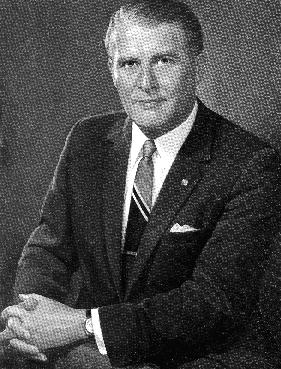
From From Nazis to Nasa: The Life of Wernher von Braun by Bob Ward:

'Von Braun's avalanche of fan mail ran the full spectrum. One woman wrote, "I only have one question before I sign off: is it possible for one to attain sexual pleasure from sending up rockets?'... One of the strangest letters, an ominous one, came from a correspondent in Germany claiming to represent a "world-famous rock'n'roll group". All that the band wanted was for von Braun to secretly bring to America a pretty, 14-year-old German girl whom they had marked for stardom as a singer. They would pay him well for his trouble but, if he didn't cooperate, it would be "death for you and your wife".'

Also:

'"It was my suggestion,' Dr Generales recalled years later, "that before he attempted a lunar flight, it might be worthwhile to try it with mice as 'passengers' first. Wernher agreed it was a good idea. And so we found ourselves spinning white mice on a specially mounted bicycle in Wernher's rooms." But disaster struck some of the experiments, as the home-made centrifuge, designed to simulate rocket take-offs, spun faster and faster, the blood of "a number of these unfortunate beasts" was flung against the ceiling of the room – with unpleasantly messy results, as von Braun later reported. "Our... inquisitions were summarily interrupted by my landlady's violent objections to a ring of mouse-blood upon the walls of my otherwise neat Swiss room." Medical student Generales dissected the mice and reported to his space-minded friend that the high acceleration had caused cerebral haemorrhages in the subject animals.'