Monday, April 18, 2011

Saturday, April 16, 2011
From Michael Sorkin's Twenty Minutes in Manhattan:
"The failure of [modernist] planning is not in its effort to be comprehensive or to equalize access to necessary facilities. It is, rather, the attempt to rationalise choice on the basis of a homogeneous set of subjects, a fixed grammar of opportunities, a remorseless segregation of uses, and a scientistic faith in technical analysis and organisation that simply excludes diversity, eccentricity, noncomforming beauty, and choice. The utopian nightmare."
Boxer, Beetle, summarised.
Tuesday, April 12, 2011
 "During a party in Weimar in the winter of 1785, Goethe had a late-night conversation on his theory of primary colours with the South American revolutionary Francisco de Miranda. This conversation inspired Miranda, as he later recounted, in his designing the yellow, blue and red flag of Gran Colombia, from which the present national flags of Colombia, Venezuela and Ecuador are derived."
Monday, April 11, 2011

Friday, April 01, 2011
Some talks I'm doing near my flat this month
Tuesday 5th April: at the London Writing Book Group in Bethnal Green Library
Saturday 9th April: with Jamie Shovlin at Dazed Live in the Tramshed, Shoreditch
Saturday 16th April: at the symposium for The Nature of Change: Hybridity and Mutation in the Old Truman Brewery, Shoreditch
Tuesday 5th April: at the London Writing Book Group in Bethnal Green Library
Saturday 9th April: with Jamie Shovlin at Dazed Live in the Tramshed, Shoreditch
Saturday 16th April: at the symposium for The Nature of Change: Hybridity and Mutation in the Old Truman Brewery, Shoreditch
Wednesday 20th April: with Hugh Frost of Landfill Editions at Land of Kings at the Print House Galler, Dalston
Tuesday, March 22, 2011

In this month's Dazed & Confused I interview two guys with unusual jobs: John Drengenberg, who tests safes in a laboratory with cutting torches and nitroglycerine, and Wilf Blum, who dives for sunken treasure off the coast of the Dominican Republic. Also jewellery designer Noemi Klein and artists Jennifer Lewandowski and Sam Levack. The whole issue is themed around money – which was sort of my idea! – even the fashion shoots.
Monday, March 21, 2011
I'm reading The High Window, Raymond Chandler's third novel. Two years ago I wrote here about how an odd passage in his story "Red Wind" comes across as a little self-referential joke about the conventions of detective fiction – or perhaps not just detective fiction, but literary realism more generally, and the accumulation of surface detail that constitutes the springs in its mattress. There's a comparable bit in The High Window:
'Okay,' I said. 'It wasn't a girl. She had help. It was a man. What did the man look like?'
He pursed his lips and made another steeple with his fingers. 'He was a middle-aged man, heavy set, about five feet seven inches tall and weighing around one hundred and seventy pounds. He said his name was Smith. He wore a blue suit, black shoes, a green tie and shirt, no hat. There was a brown bordered handkerchief in his outer pocket. His hair was dark brown sprinkled with grey. There was a bald patch about the size of a dollar on the crown of his head and a scar about two inches long running down the side of his jaw. On the left side, I think. Yes, on the left side.'
'Not bad,' I said. 'What about the hole in his right sock?'
'I omitted to take his shoes off.'
'Darn careless of you,' I said.
No explanation is given for Mr. Morningstar's eidetic memory. He just happens to be a character who talks like a narrator!
The High Window also contains a few paragraphs about Bunker Hill, at the beginning of Chapter Eight, that rank among Chandler's very best descriptive passages. Reading Chandler after so many decades of Chandler imitators and Chandler parodies, it's sometimes easy to forget that he's not writing about some unreal and self-contained Marloweland, he's writing, brilliantly, about a specific city at a specific time. While researching The Teleportation Accident I've got through a lot about Los Angeles in the 1930s, but there's no non-fiction book that's as useful as Chandler.
Tuesday, March 15, 2011
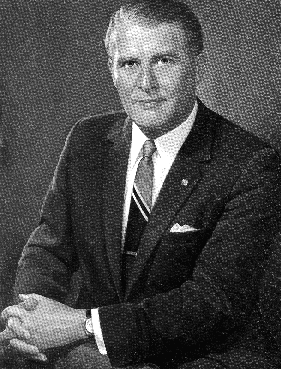 From From Nazis to Nasa: The Life of Wernher von Braun by Bob Ward:
'Von Braun's avalanche of fan mail ran the full spectrum. One woman wrote, "I only have one question before I sign off: is it possible for one to attain sexual pleasure from sending up rockets?'... One of the strangest letters, an ominous one, came from a correspondent in Germany claiming to represent a "world-famous rock'n'roll group". All that the band wanted was for von Braun to secretly bring to America a pretty, 14-year-old German girl whom they had marked for stardom as a singer. They would pay him well for his trouble but, if he didn't cooperate, it would be "death for you and your wife".'
Also:
'"It was my suggestion,' Dr Generales recalled years later, "that before he attempted a lunar flight, it might be worthwhile to try it with mice as 'passengers' first. Wernher agreed it was a good idea. And so we found ourselves spinning white mice on a specially mounted bicycle in Wernher's rooms." But disaster struck some of the experiments, as the home-made centrifuge, designed to simulate rocket take-offs, spun faster and faster, the blood of "a number of these unfortunate beasts" was flung against the ceiling of the room – with unpleasantly messy results, as von Braun later reported. "Our... inquisitions were summarily interrupted by my landlady's violent objections to a ring of mouse-blood upon the walls of my otherwise neat Swiss room." Medical student Generales dissected the mice and reported to his space-minded friend that the high acceleration had caused cerebral haemorrhages in the subject animals.'
Saturday, February 26, 2011
 Boxer, Beetle is now out in paperback. Also, next Saturday I will be appearing briefly on BBC2 as part of a Culture Show special about new novelists.
Tuesday, February 15, 2011
 "References are something of a speciality for me": on recording an amateur DVD commentary for Christopher Nolan's Inception (2010)
My three favourite cultural experiences of 2010 (that involved leaving the house) were 1. Punchdrunk and ENO's The Duchess of Malfi, 2. Mountain Man at St. Augustine's Tower and 3. Inception at IMAX. I love Inception. I spent a lot of time last year thinking about Inception, reading about Inception, writing about Inception, and talking about Inception, mostly with my friend Bea, who loves it as much as I do. And on the DVD of Inception, there's no audio commentary by Christopher Nolan, so last week Bea and I decided to record one of our own. In the annals of audio commentaries recorded by people who were not themselves involved in the making of the film, can it take its place alongside, for instance, Peter Bogdanovich on Citizen Kane? Well, I haven't heard that one, so for all I know, yeah, maybe.
Or maybe not. We hadn't really prepared, and although Bea and I both have quite a lot to say about Inception, the film is 142 minutes long, and we definitely don't have 142 minutes of insights about Inception. We have, on a generous estimate, 20 minutes. So, like real life, the commentary is mostly composed of pauses, repetitions, banalities and digressions. Other problems here include my mis- and over-use of words like "materiality" and "Borgesian" in an attempt to justify this project with respect to my status as an aspiring public intellectual; Bea's insistence, based largely on the presence of Leonard DiCaprio, that Inception is a sort of crypto-sequel to Titanic; my own forlorn determination to prove, with frequent but vague references to certain personal misfortunes in the period of the film's release, that Inception is the greatest break-up film since Swingers; Bea's intense but ambivalent relationship with the feminist conceptual framework of her Film Studies MA; the cocker spaniel barking in the background; and so on.
Oh, wait, have I inadvertently make it sound fantastic? Forget that.
Anyway, we had fun doing it. And next time, we'll do better. (What film shall we pick? I vote Cloverfield, another Hollywood blockbuster that made cry and probably shouldn't have.) Do we seriously think anyone will listen to the whole thing? Well, maybe. For example, you may recently have thought to yourself, "I am on the internet and I would like to lose all my remaining respect for '20-something hipster novelist' Ned Beauman, but I can't just look at his Twitter feed, which is the usual method, because he's not on Twitter – what shall I do?" In that case, this is your lucky day. I suggest you put on your DVD of Inception, turn the sound down, pause it at 0:00:01, download this file, start both simultaneously, and join Bea and me as, like Mal and Cobb, we wander aimlessly through the unpopulated landscape of our own minds.
Tuesday, December 28, 2010
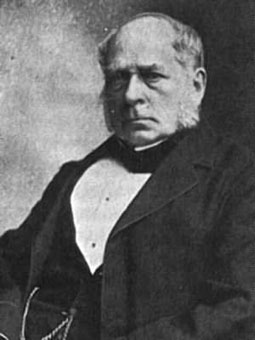 In Paul Collins' delightful Banvard's Folly I have just come across the story of Victorian inventor Henry Bessemer, who went to great lengths to protect his steam-powered machine for the manufacture of cheap bronze powder from industrial espionage. It's like something from Pynchon! From his memoirs:
'Up to this juncture the details of my invention and the nature of the several machines used in the process were an absolute secret, and I feared to patent these inventions: firstly, because they might be modified or improved by others, but chiefly because secret machinery could be erected abroad, and the article smuggled into this country without fear of detection, because powder cannot be identified as having been made by any special machinery. Thus, a patent would have afforded no protection whatever to me. Then came the difficult question of continued secrecy; there were powerful machines of many tons in weight to be made; some of them were necessarily very complicated, and somebody must know for whom they were. The result of a review of all these difficulties was this:
Firstly, we both agreed that if brass were still to be sold at a higher price than silver, it would be impossible for us to maintain this price if all the details of my system were shown and described in a patent blue-book, which anyone could buy for six pence. This fact absolutely decided me not to patent the invention.
Secondly, how could we trust workpeople who could have a thousand pounds or so given them at any time for an hour or two's talk with a rival manufacturer? This difficulty we proposed to meet by engaging, at high salaries, my wife's three young brothers, on whom we felt we could entirely rely; so this point was satisfactorily arranged.
Thirdly, how about making these massive machines? What engineers could we trust? -- for any engineer must have such work done in his workshops open to the eyes of all his men.
Fortunately, here I was enabled to step in.I could undertake personally to make, not only all the general plans, but also each of the working drawings, to a large scale, for each of the machines required; and when I had thus devised and settled every machine as a whole, I undertook to dissect it and make separate drawings of each part, accurately figured for dimensions, and to take these separate parts of the several machines and get them made: some in Manchester, some in Glasgow, some in Liverpool, and some in London, so that no engineer could ever guess what these parts of machines were intended to be used for. Of course, I was able to undertake the proper fitting together of all these detached parts after they had arrived in London[...]
The ground for the factory having been chosen, and a long lease of the premises obtained, I had next to plan the necessary buildings. One or two cardinal points were first determined. A substantial wall was to separate the engine and boiler-house from the factory proper, into which the engine-driver could have no access or connection whatever, except in so far that the shafting from the 20 horse-power engine passed through a stuffing-box in the wall of separation. Access to the engine-house and coal-store was confined to a back entrance leading into another street.
The factory proper was to have but one external door, opening into a large hall, from which all the other rooms were separated by locked doors; there were no windows, except to this one outer room, all light being obtained by means of double skylights, through which no one could look; and these were further secured by impregnable inside sliding shutters. Adjoining the entrance-hall was a washing and dressing-room, as a change of clothes on going in and coming out was imperative.
Then came other important provisions rendered necessary by the fact that the machinery was massive and very heavy, and no labourers or other workmen could be admitted to assist in putting it together and erecting it in its destined place. Concrete foundations and iron bed-plates had been put in wherever necessary, with bolts inserted therein corresponding with bolt-holes in the machine framing then being made. Heavy beams were fixed on the walls crossing over the several places where the weighty machines were to be erected, each beam having stout eye-bolts inserted in it for the purpose of attaching a block-and-tackle for hoisting. In order to facilitate the erection of all this machinery by myself and my three unpractised assistants, I had so divided the large frame castings that no single piece would weigh over ten or fifteen hundredweight.
All the smaller shafts and driving-drums were put in place, the gas and water laid on, and Chubb's safety-locks were affixed to every door before any of the machinery had arrived. The last workman had already departed, and silence reigned supreme in the empty building, into which, from that day forward, for probably twenty years, only five persons ever passed. In such a case secrecy must be absolute to be effective, and although mere vague curiosity induced many persons of my intimate acquaintance to ask to be allowed to just go in and have a peep, I never admitted anyone. Even my own sons were rigidly excluded until they were grown up. When mere lads, if they teased me to let them in, I would sometimes say, "No, you will find much more amusement at the theatres, and to-night you may go if you wish." I need scarcely say that this was greatly preferred.'
Tuesday, December 21, 2010
 In the new issue of Frieze magazine you'll find my first ever attempt at art criticism, a review of British Art Show 7 which concentrates mostly on Matthew Darbyshire's installation An Exhibition for Modern Living.
Sunday, December 19, 2010
Last month I was a guest on a new podcast called East Pillage, hosted by Dan Murtha of the band Danimal Kingdom. We talked about Batman, Charles Burns, and indie computer games. It's pretty niche!
Thursday, December 09, 2010
"The one great personal tragedy of [Edward Page] Mitchell's life was a bizarre accident in 1872, when he was twenty years old. On a train journey from Bowdoin College to Bath, Maine, a hot cinder from the engine's smokestack flew in through the window and struck Mitchell's left eye, blinding it. After several weeks, while doctors attempted to restore this eye's sight, Mitchell's uninjured right eye suddenly underwent sympathetic blindness, rendering him completely sightless. His burnt left eye eventually healed and regained its sight, but his uninjured right eye remained blind. The sightless eye was later removed surgically, and replaced with a prosthetic glass eye."
Subscribe to:
Posts (Atom)