Wednesday, March 10, 2010

Paris in the 17th century:

"A politician called Jean-Jacques Rounuard de Villayer, tired of sending servants to deliver messages and money across the expanding city, came up with the idea of a postal service and postboxes began to spring up in the well-heeled parts of town. The first properly run public transport systems had apepared earlier in the century – a carriage for hire by several citizens at once and called a carrosse had been invented by an enterprising carpenter called Nicolas Sauvage in around 1654. By the 1660s, more than twenty or so of these carriages could regularly be found lined up for hire at the church of Saint-Fiacre (they were nicknamed fiacres thereafter) and a decade or so later, following itineraries dvised by the philosopher and mathematician Blaise Pascal, for 5 sous, the Parisian could travel in some comfort from the Palais de Luxembourg to the Pont-Neuf to the Louvre and back again."

from Paris: The Secret History by Andrew Hussey

Tuesday, March 09, 2010

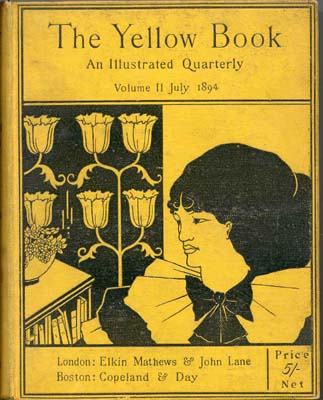
"The Harvard Aesthetes of 1916 were trying to create in Cambridge, Massachusetts, an after-image of Oxford in the 1890s. They read the Yellow Book, they read Casanova's memoirs and Les Liaisons Dangereuses, both in French, and Petronius in Latin; they gathered at teatime in one another's rooms, or at punches in the office of the Harvard Monthly; they drank, instead of weak punch, seidels of straight gin topped with a maraschino cherry; they discussed the harmonies of Pater, the rhythms of Aubrey Beardsley and, growing louder, the voluptuousness of the Church, the essential virtue of prostitution. They had crucifixes in their bedrooms, and ticket stubs from last Saturday's burlesque show at the Old Howard. They wrote, too; dozens of them were prematurely decayed poets, each with his invocation to Antinoüs, his mournful descriptions of Venetian lagoons, his sonnets to a chorus girl in which he addressed her as 'little painted poem of God.' In spite of these beginnings, a few of them became good writer."

from Exile's Return by Malcolm Cowley

Tuesday, March 02, 2010

"Halfway across the stone bridge I was so struck by the beauty of the view that I sat down on the low wall and gave myself up to contemplation. A similarly extensive view of life was what I lacked. I was still distracted and engrossed by every detail, I could see every hair and pimple on a human face, without seeing the face itself. I had, morever, no experience of anything but ecstasy. I had never known despair or anguish, which I looked on as literary expressions. I had not endured hunger, frustration, illness, or chastity; these were the afflictions of others. I had nothing on my conscience and had never wept except from loneliness, fright, or boredom. How then was I qualified to write? Could I go on treating life as an amusing spectacle, a kind of joke? the only serious emotions I had were connected with my sense of the hideously fleeting passage of my own happiness, of the mortal beauty of everything I saw, of the inexorable progress of my own body to decay and death; but the conclusions to be drawn from these seemed neither original nor profound. I was at last faced with the fact that the only thing bothering me was not having enough money and that all I desired in the literary way was not to be a bore."

from Memoirs of Montparnasse by John Glassco

Thursday, February 25, 2010

Here is an interesting account of a talk by the restaurateur Alan Yau. I love Alan Yau.

Monday, February 22, 2010

'Hemingway's account of his Paris apprenticeship from 1922 to 1926 are full of dedication and poverty. The dedication was authentic, but the poverty was illusory. At the time of their marriage Hadley had an income of $3,000 a year from her trust fund. Americans with dollars could live comfortably in Paris during the Twenties, for the rate of exchange was favorable. Although Hadley's income was reduced by the mismanagement of her trustee, the Hemingways were never paupers and did not have to rely on his sporadic earnings for eating or drinking money. Their apartment lacked plumping, but there was always money for the things he wanted to do. "Hunger was good discipline," he claimed in A Moveable Feast; nonetheless, they had a cook.'

from Fitzgerald and Hemingway by Matthew J. Bruccoli

Tuesday, January 26, 2010

Because obsessively manicuring my internet presence is a lot easier than actually sitting down to write my second novel, I have just updated my 2005-2009 journalism archive for the final time. You can now read, among 150+ other articles, my lengthy interview with Bradford Cox of Deerhunter from the December issue of Dazed & Confused, my essay on urban foxes from Meat, and my risotto recipe from Hustle, London!, which is probably my favourite thing that I've ever published. Since I've already got in trouble about that piece at least once, I should probably emphasise that the whole thing is written in character...

Friday, January 22, 2010

"But sometimes I get the impression that all this is a rubbishy rumour, a tired legend, that it has been created out of those same suspicious granules of approximate knowledge that I use myself when my dreams muddle through regions known to me only by hearsay or out of books, so that the first knowledgeable person who has really seen at the time the place referred to will refuse to recognise them, will make fun of the exoticism of my thoughts, the hills of my sorrow, the precipices of my imagination, and will find in my conjectures just as many topographical errors as he will find anachronisms. So much the better."

- Nabokov, The Gift

Sunday, January 10, 2010

I've redesigned my website. There's actually less information on it now than there was before so I'm not sure this counts as progress.

Friday, January 08, 2010

"Thursday was a zombie plague, Saturday was a neutron bomb, and Monday was romance, but tomorrow, Tuesday, was a custom job."

That's the opening sentence of my short story "Client" in the new issue of Icon, my favourite architecture magazine. Very appropriate that it comes out the same week as the opening of the Burj Khalifa. Meanwhile, Eurogamer.net just ran a preview of a game called Spec Ops: The Line, in which you fight through a ruined near-future Dubai: "The tops of buried skyscrapers peek through ever-shifting dunes, whilst the city's chattels of excess lie forgotten and useless in its streets."

Thursday, January 07, 2010

Yesterday my friend Hermione sent me this great photo of a fox that was published on the Telegraph website, to which the title of this blog could not be more relevant, and then today I happened to come across this passage in The Life of Lenin by Louis Fischer:

Once Lenin and Krilenko went fox hunting. The Russian method in this aristocratic sport consists in forcing the fox into a very large circle marked by red flags from which there is only one exist and, by handclapping and yells, to impel the fox to that exit where the hunter waits. The fox came straight at Lenin, who did not notice him because the animal's bright red fur was covered with snow fallen from the spruce trees. When Lenin became aware of the fox's presence he was transfixed and "stared... and stared... and did not shoot." The fox looked at Lenin as he slowly raised his gun, then lifting his tail, made off like lightning.

"Why didn't you shoot?" Krilenko exclaimed.

"He was so beautiful and pretty," Lenin apologized. "I'm not a hunter but a shoemaker."

Monday, January 04, 2010

A little book to which I contributed has just come out in the UK. It's called Dear Old Love, compiled by Andy Selsberg, and it's a paper version of the terrific blog of the same name. I interviewed Andy last year for Jess Holland's Hustle, London! zine, so perhaps this is a good opportunity to put that Q&A online for the first time.

Who are you?
I'm a freelance writer, and I teach freshman composition part time. I'm originally from Wisconsin, now living in Brooklyn.

What was the inspiration for the site?
I had a personal, aphoristic blog for a years. I love the openness of the web, mixed with a disciplined concision - looking for those perfect lines. My focus on the original blog started to dip. I got married this summer, and briefly considered writing a book-length fictionalized letter to an ex (along the lines of Home Land by Sam Lipsyte). But I can't seem to write much more than a few sentences at a time now. All that somehow pointed to Dear Old Love.

Are you on the site yourself?
I'm definitely on the site, definitely more than once. I wanted to set a tone. And I don't think you need to have had a lot of relationships to have a lot of DOL notes in you. It's more a way of looking at the world, sussing out the right details. You could get dozens out of childhood crush on a sweetie down the block. I'm reading the Charles Schulz/Peanuts biography right now, and it's amazing how much "little red-haired girl" mileage he got out of very little raw relationship material.

Do you ever get any submissions that are simply too sad to include?
Most submissions don't get posted, but not due to excess sadness. I'm looking for freshness, humour, poignancy - an old feeling expressed a new way. The site exists for the pleasure of readers more than the therapy of writers. In the midst of heartbreak, it can be tough to come up with original, resonant ideas on the topic. I worry that one boring entry or two will turn readers off. The web is tough like that.

What’s your favourite break-up song?
Favourite break-up song is "Missing You" by your countryman John Waite. Love the way the proclamation "I ain't missing you" contradicts itself. Plus I was born in the early 70's and think pop culture peaked in 1984.

Monday, December 21, 2009

Last week I went to the Epstein/Gaudier-Brzeska/Gill exhibition at the Royal Academy, which was excellent, except in that I was hoping it basically would all be modernist robot sentries like the one on the poster, and it wasn't. (More my fault than the exhibition's.) Anyway, one thing I noticed is that several of the sculptures first entered the public museum system through donations by Josephine Porter Boardman Crane, aka Mrs. Murray Crane. The Crane family made their fortune from the Crane & Co. paper company, which was founded as the Liberty Paper Mill by the novelist and war correspondent Stephen Crane (Red Badge of Courage), and then in 1879 won a contract to supply paper to the US mint. In other words, every time Josephine Crane spent a dollar of her inheritance on a newspaper or a toffee apple, she was making use of the very product from which that inheritance derived. What a beautifully self-reflexive basis for a trust fund! She also founded the Dalton School in New York, where some of the minor characters in Gossip Girl go, and her daughter Louise was a friend of Tennessee Williams and Elizabeth Bishop.

Saturday, December 19, 2009

I've started a weekly column for the relaunched Another Magazine website. As my esteemed editor describes it there: "Ned Beauman’s Epitaph is a weekly tribute to pioneers and heavyweights who died on this day in history, and the unexpected coincidences that bind them together." Three installments up so far: Ada Lovelace and Abraham de Moivre; Jay Gould, John Nicholas Ringling and Pablo Escobar; and Antonio Stradivari and Jean-Baptiste Lamarck.

Tuesday, December 01, 2009