"Just as the businessman
Invests money in a concern, so you think the audience invests
Feeling in the hero: they want to get it back again
If possible doubled."
- Brecht on The Mother, 1935
Wednesday, May 06, 2009

Tuesday, April 28, 2009

Monday, April 27, 2009
Now that I've finally finished the (staggering) Augie March, four more notes on it:
1. Bellow carries on introducing new characters right up until page 613 of this 616-page book, finishing with the "grotesque" maid Jacqueline, who gets a 300-word paragraph of description even though there is no longer time for her to do anything whatsoever. That is awesome.
2. Relatedly, the book contains my favourite ever compound adjective: "furniture-insatiable", about Einhorn's wife Tillie.
3. Martin Amis often mentions Bellow as an influence, and this passage very much seems to prefigure some of aspects of Amis' style:
"Around him spectators from the millions gowping at him, famine-marks, louse-vehicles, the supply of wars, the living fringe of a great number sunk in the ground, dead, and buzzing or jumping over Asia like diatoms of the vast bath of the ocean in the pins of the sun."
4. Someone called Trevor has, for some reason, used an OCR programme to post the entire text online here, which is useful if you want to look anything up.
1. Bellow carries on introducing new characters right up until page 613 of this 616-page book, finishing with the "grotesque" maid Jacqueline, who gets a 300-word paragraph of description even though there is no longer time for her to do anything whatsoever. That is awesome.
2. Relatedly, the book contains my favourite ever compound adjective: "furniture-insatiable", about Einhorn's wife Tillie.
3. Martin Amis often mentions Bellow as an influence, and this passage very much seems to prefigure some of aspects of Amis' style:
"Around him spectators from the millions gowping at him, famine-marks, louse-vehicles, the supply of wars, the living fringe of a great number sunk in the ground, dead, and buzzing or jumping over Asia like diatoms of the vast bath of the ocean in the pins of the sun."
4. Someone called Trevor has, for some reason, used an OCR programme to post the entire text online here, which is useful if you want to look anything up.
Friday, April 17, 2009
 "There was another incident that took place prior to the shooting of Notorious [in 1944]. Ben Hecht and I went over to the California Institute of Technology at Pasadena to meet Dr. Millikan, at that time one of the leading scientists in America. We were shown into his office, and there in a corner was a bust of Einstein. Very impressive. The first question we asked him was: 'Dr. Millikan, how large would an atom bomb be?' He looked at us and said, 'You want to have yourselves arrested and hae me arrested as well?' Then he spent an hour telling us how impossible our idea was, and he concluded that if only they could harness hydrogen, then that would be something. He thought he had succeeded in convincing us that we were barking up the wrong tree, but I learned later that afterward the FBI had me under surveillance for three months."
- Alfred Hitchcock, from Hitchcock Truffaut by Francois Truffaut
Thursday, April 02, 2009
 "External life being so mighty, the instruments so huge and terrible, the performances so great, the thoughts so great and threatening, you produce a someone who can exist before it. You invent a man who can stand before the terrible appearances. This way he can't get justice and he can't give justice, but he can live. And this is what mere humanity always does. It's made up of these inventors or artists, millions and millions of them, each in his own way trying to recruit other people to play a supporting role and sustain him in his make-believe... That's the struggle of humanity, to recruit others to your version of what's real."
"I mean you have been disappointed in love, but don't you know how many things there are to be disappointed in besides love? You are lucky to be still disappointed in love. Later it may be even more terrible."
- both from Chapter 19 of The Adventures of Augie March by Saul Bellow
Wednesday, March 25, 2009
 I was just rereading a bit of How Fiction Works by James Wood and I think my favourite bit in the whole book is this little section on "capturing a central human truth":
"There is such a moment in The Radetzky March, when the old captain visits his dying servant, who is in bed, and the servant tries to click his naked heels together under the sheets... or in The Possessed, when the proud, weak governor, von Lembke, loses his control. Shouting at a group of visitors in his drawing room, he marches out only to trip on the carpet. Standing still, he looks at the carpet, and ridiculously yells, 'have it changed!' - and walks out... or when Charles Bovary returns with his wife from the grand ball at La Vaubyessard, which has so enchanted Emma, rubs his hands together and says: 'It's good to be home'... or in Sentimental Education when Frederic takes his rather humble mistress to Fontainebleau. She is bored but can tell that Frederic is frustrated with her lack of culture. So in one of the galleries, she looks around at the paintings and, trying to say something knowing and impressive, merely exclaims: 'All this brings back memories!'... or when, after his divorce, Anna Karenina's husband, the stiff and joyless civil servant, goes around introducing himself with the line: 'You are acquainted with my grief?'
Tuesday, March 17, 2009
"My name is a brand name, and whoever uses this brand name has to pay for it."
- Bertolt Brecht in 1929, quoted in The Life and Lies of Bertolt Brecht by John Fuegi
Fascinating to find an arch-Marxist anticipating Warhol's idea of the artist-as-corporation.
Unrelatedly, the book also reveals that Brecht circulated explicitly gay sonnets under Thomas Mann's name as a means of attack on Mann.
- Bertolt Brecht in 1929, quoted in The Life and Lies of Bertolt Brecht by John Fuegi
Fascinating to find an arch-Marxist anticipating Warhol's idea of the artist-as-corporation.
Unrelatedly, the book also reveals that Brecht circulated explicitly gay sonnets under Thomas Mann's name as a means of attack on Mann.
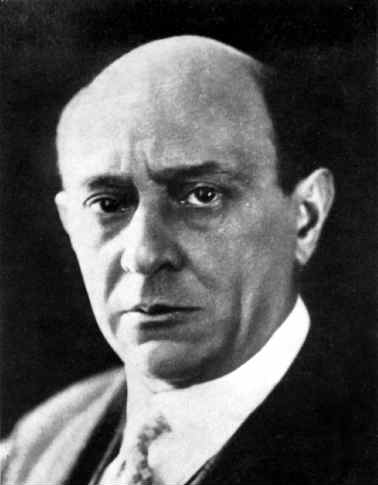 "Arnold Schoenberg (1874-1951) was particularly displeased with Thomas Mann for having presented Adrian Leverkuhn [the protagonist of Mann's novel Doctor Faustus (1947)] as the inventor of the dodecaphonic method without even mentioning Schoenberg's name. In Febuary 1948 Schoenberg sent Thomas Mann an article which he had composed for an imaginary 'Encyclopaedia Americana' for the year 1988. Writing under the pseudonym Hugo Triebsamen, he attempted to suggest the damage which he believed the character of Leverkuhn could well inflict upon his own subsequent reputation. The article presents Thomas Mann as a writer who was originally a musician and the true inventor of the dodecaphonic technique. The writer suffers in silence when a certain thieving composer called Schoenberg appropriates this discovery for himself. It is only in Doctor Faustus that the writer openly proclaims this spiritual-musical property as his own."
- from the notes on Theodor W. Adorno and Thomas Mann: Correspondence 1943-1955, ed. Christoph Godde and Thomas Sprecher, trans. Nicholas Walker
Mann later tried to placate Schoenberg but he did not succeed. The invention of real things is an interesting problem in fiction: I had always wondered about The Hudsucker Proxy, in which Tim Robbins' character "invents" the hula hoop, but Wikipedia reveals that although the Wham-O toy company repopularised the hula hoop in the late 50s, they were unable to patent it because it had been in use for thousands of years.
The letters also reveal that Mann lived long enough - by about a year - to see, and dislike, the original Paris production of Waiting For Godot. "I cannot help feeling some anxiety for the society that finds acclaimed expression in such a work."
Monday, February 09, 2009
 Read this extraordinary paragraph, appropriately enough, on the train into work today:
"It was now full winter, and barbarous how raw; so going around the city on the spidery cars, rides lasting hours, made you stupid as a stoveside cat because of the closeness inside; and htere was something fuddling besides in the mass piled up of uniform things, the likeness of small parts, the type of newspaper columns and the bricks of buildings. To sit and be trundled, why you see: there's a danger in that of being a bobbin for an endless thread or bolt for yard goods; if there's not much purpose anyway in the ride. And if there's some amount of sun in the dusty weep marks of the window, it can be even worse for the brain than those iron-deep clouds just plain brutal and not mitigated. There haven't been civilizations without cities. But what about cities without civilizations? An inhuman thing, if possible, to have so many people together who beget nothing on one another. No but it is not possible, and the dreary begets its own fire, and so this never happens."
- The Adventures of Augie March by Saul Bellow
(For comparison, try this great article about commuting from the New Yorker.)
Sunday, November 23, 2008
In all the coverage of Iceland's banking crisis, I haven't seen anyone mention that Iceland has won more gold medals (9) than any other country in the annual World's Strongest Man competition. Perhaps they can get their economy back on track by concentrating on the export of tremendously muscular fisherman.
Incidentally, here is an amazing song by the Pudzian Band, the band founded by current World's Strongest Man Mariusz Pudzianowski. It's a lot more eurotechno than you'd expect.
Incidentally, here is an amazing song by the Pudzian Band, the band founded by current World's Strongest Man Mariusz Pudzianowski. It's a lot more eurotechno than you'd expect.
Thursday, November 13, 2008
 Two observations on Home Land by Sam Lipsyte:
1. You're a young male American novelist and you've written a book about someone who's bored of his life - it's conversational, flippant, obsessed with its own contemporaneity - people will like it because it's theoretically a worthwhile literary novel and yet it takes absolutely no mental effort to read or understand. But you've left no place for actual human feeling. So you crowbar in a dead or dying mother. This happens in Bright Lights, Big City by Jay McInerney, Microserfs by Douglas Coupland, Home Land by Sam Lipsyte, and doubtless many others I've forgotten. Enough! It's so fake!
(Admittedly, I did enjoy all three of those books quite a lot.)
2. The front cover of my paperback edition (above) has the following quote:
'You'll love it' Lad's Mag
No one at HarperPerennial noticed there was still uncorrected dummy text on the front cover?
Saturday, October 11, 2008
 A couple of very Ballardian passages from The Moviegoer, which came out eight years before The Atrocity Exhibition:
After a car crash:
The traffic has slowed, to feast their eyes on us. A Negro sprinkling a steep lawn under a summer house puts his hose down altogether and stands gaping. By virtue of our misfortune we have become a thing to look at and witnesses gaze at us with heavy-lidded almost seductive expressions. But almost at once they are past and those who follow see nothing untoward. The Negro picks up his hose. We are restored to the anonymity of our little car-space.A married couple who have written a sex manual:
It is impossible not to imagine them at their researches, as solemn as a pair of brontosauruses, their heavy old freckled limbs twined about each other, hands probing skillfully for sensitive zones, pigmented areolas, out-of-the-way mucous glands, dormant vascular nexuses.And a bit that made me laugh:
As for Sharon: she finds nothing amiss in sitting in the little bucket seat with her knees doubled up in the sunshine, dress tucked under. An amber droplet of Coca-Cola meanders along her thigh, touches a blond hair, distributes itself around the tiny fossa.
"Aaauugh," I groan aloud.
"What's the matter?"
"It is a stitch in the side." It is a sword in the heart.
Friday, October 03, 2008

Subscribe to:
Posts (Atom)