Friday, May 28, 2010

Tuesday, May 25, 2010
 So Boxer, Beetle came out in a German translation earlier this month under the title Flieg, Hitler, Flieg. Why is it out in Germany, Austria and Switzerland before it's out in the UK? No particular reason. I mention it because I've just had a long review in the Frankfurter Allgemeine Zeitung, and I'm pleased to say it's a review that really gets the book. (Well, I think it does; although I'm now writing a novel with a German protagonist, I don't actually speak any German, so I've had to use Google Translate. "And yet he succumb especially those who aspire as Erskine nigh hysterical after drift-order systems." Couldn't have put it better myself.)
Saturday, May 15, 2010
Thursday, April 15, 2010
"Until now no concern had been expressed about the possible side-effects of the rejuvenation operations. But on 12 May 1921, the death in London was announced of Alfred Wilson, a wealthy septuagenarian, who had made his money in ship-breaking. This otherwise unremarkable event had aroused interest because some months previously he had gone to Vienna and had undergone the Steinach operation. On his return to London he had felt so well that he booked the Albert Hall in London to deliver a lecture entitled 'How I Was Made Twenty Years Younger'. A little while before the lecture he had visited his doctor and complained of some chest pain. Both doctor and patient agreed that this discomfort was the result of Wilson's new habit of hitting himself on the chest to demonstrate his renewed virility. However, the pain probably came from a coronary artery disease and Wilson dropped dead from a heart attack twelve hours before giving his lecture. At the inquest into the the death it was mentioned that Dr Steinach had charged £700 for the operation."
from The Monkey Gland Affair by David Hamilton
from The Monkey Gland Affair by David Hamilton
Wednesday, March 31, 2010
 Josef Svoboda "described a scenography for a proposed production of Faust in 1970 with director Alfred Radok, in which a crucial conceptual understanding was that Mephistopheles and Wagner, Faust's student and domestic servant, were one and the same person, and, of course, one and the same actor. The stage box was an empty and seemingly void space, shaped only by huge, very dark brown, barely distinguishable wall surfaces to the back and sides. The stage floor was steeply raked and apparently flagged with stone. A crucial feature of this floor was that beneath the stage were to be fitted felt-covered 'dampers' that could, by the action of the silently operating pistons, be made to press against the under-surface of the stage and render it silent. As Faust prepared his occult pentagram down stage to 'conjure' diabolic forces, the stage would echo with the sound of his and Wagner's footsteps. Wagner, however, would not engage or assist in Faust's conjuring practices; he would turn and make to elave, walking up stage, and his echoing foosteps would be heard. As he reached the farthest limit of the stage he would turn and walk back down the stage in total silent to stand before Faust – everyone in the theatre would know that in that transition of sound from echoing noise to silence he had become Mephistopheles."
from Theatre, Performance and Technology by Christopher Baugh
Wednesday, March 10, 2010
 Paris in the 17th century:
"A politician called Jean-Jacques Rounuard de Villayer, tired of sending servants to deliver messages and money across the expanding city, came up with the idea of a postal service and postboxes began to spring up in the well-heeled parts of town. The first properly run public transport systems had apepared earlier in the century – a carriage for hire by several citizens at once and called a carrosse had been invented by an enterprising carpenter called Nicolas Sauvage in around 1654. By the 1660s, more than twenty or so of these carriages could regularly be found lined up for hire at the church of Saint-Fiacre (they were nicknamed fiacres thereafter) and a decade or so later, following itineraries dvised by the philosopher and mathematician Blaise Pascal, for 5 sous, the Parisian could travel in some comfort from the Palais de Luxembourg to the Pont-Neuf to the Louvre and back again."
from Paris: The Secret History by Andrew Hussey
Tuesday, March 09, 2010
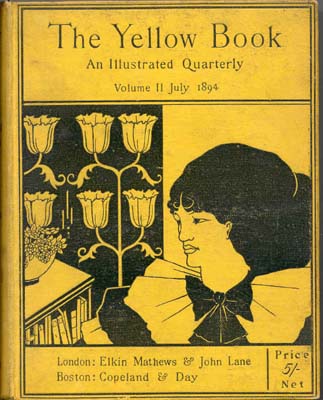 "The Harvard Aesthetes of 1916 were trying to create in Cambridge, Massachusetts, an after-image of Oxford in the 1890s. They read the Yellow Book, they read Casanova's memoirs and Les Liaisons Dangereuses, both in French, and Petronius in Latin; they gathered at teatime in one another's rooms, or at punches in the office of the Harvard Monthly; they drank, instead of weak punch, seidels of straight gin topped with a maraschino cherry; they discussed the harmonies of Pater, the rhythms of Aubrey Beardsley and, growing louder, the voluptuousness of the Church, the essential virtue of prostitution. They had crucifixes in their bedrooms, and ticket stubs from last Saturday's burlesque show at the Old Howard. They wrote, too; dozens of them were prematurely decayed poets, each with his invocation to Antinoüs, his mournful descriptions of Venetian lagoons, his sonnets to a chorus girl in which he addressed her as 'little painted poem of God.' In spite of these beginnings, a few of them became good writer."
from Exile's Return by Malcolm Cowley
Tuesday, March 02, 2010
"Halfway across the stone bridge I was so struck by the beauty of the view that I sat down on the low wall and gave myself up to contemplation. A similarly extensive view of life was what I lacked. I was still distracted and engrossed by every detail, I could see every hair and pimple on a human face, without seeing the face itself. I had, morever, no experience of anything but ecstasy. I had never known despair or anguish, which I looked on as literary expressions. I had not endured hunger, frustration, illness, or chastity; these were the afflictions of others. I had nothing on my conscience and had never wept except from loneliness, fright, or boredom. How then was I qualified to write? Could I go on treating life as an amusing spectacle, a kind of joke? the only serious emotions I had were connected with my sense of the hideously fleeting passage of my own happiness, of the mortal beauty of everything I saw, of the inexorable progress of my own body to decay and death; but the conclusions to be drawn from these seemed neither original nor profound. I was at last faced with the fact that the only thing bothering me was not having enough money and that all I desired in the literary way was not to be a bore."
from Memoirs of Montparnasse by John Glassco
from Memoirs of Montparnasse by John Glassco
Thursday, February 25, 2010
Monday, February 22, 2010
 'Hemingway's account of his Paris apprenticeship from 1922 to 1926 are full of dedication and poverty. The dedication was authentic, but the poverty was illusory. At the time of their marriage Hadley had an income of $3,000 a year from her trust fund. Americans with dollars could live comfortably in Paris during the Twenties, for the rate of exchange was favorable. Although Hadley's income was reduced by the mismanagement of her trustee, the Hemingways were never paupers and did not have to rely on his sporadic earnings for eating or drinking money. Their apartment lacked plumping, but there was always money for the things he wanted to do. "Hunger was good discipline," he claimed in A Moveable Feast; nonetheless, they had a cook.'
from Fitzgerald and Hemingway by Matthew J. Bruccoli
Tuesday, January 26, 2010
Because obsessively manicuring my internet presence is a lot easier than actually sitting down to write my second novel, I have just updated my 2005-2009 journalism archive for the final time. You can now read, among 150+ other articles, my lengthy interview with Bradford Cox of Deerhunter from the December issue of Dazed & Confused, my essay on urban foxes from Meat, and my risotto recipe from Hustle, London!, which is probably my favourite thing that I've ever published. Since I've already got in trouble about that piece at least once, I should probably emphasise that the whole thing is written in character...
Friday, January 22, 2010
"But sometimes I get the impression that all this is a rubbishy rumour, a tired legend, that it has been created out of those same suspicious granules of approximate knowledge that I use myself when my dreams muddle through regions known to me only by hearsay or out of books, so that the first knowledgeable person who has really seen at the time the place referred to will refuse to recognise them, will make fun of the exoticism of my thoughts, the hills of my sorrow, the precipices of my imagination, and will find in my conjectures just as many topographical errors as he will find anachronisms. So much the better."
- Nabokov, The Gift
- Nabokov, The Gift
Sunday, January 10, 2010
I've redesigned my website. There's actually less information on it now than there was before so I'm not sure this counts as progress.
Friday, January 08, 2010
 "Thursday was a zombie plague, Saturday was a neutron bomb, and Monday was romance, but tomorrow, Tuesday, was a custom job."
That's the opening sentence of my short story "Client" in the new issue of Icon, my favourite architecture magazine. Very appropriate that it comes out the same week as the opening of the Burj Khalifa. Meanwhile, Eurogamer.net just ran a preview of a game called Spec Ops: The Line, in which you fight through a ruined near-future Dubai: "The tops of buried skyscrapers peek through ever-shifting dunes, whilst the city's chattels of excess lie forgotten and useless in its streets."
Subscribe to:
Posts (Atom)