Wednesday, June 17, 2009
Terrific bit of trivia from Wikipedia: "In June 1949, [Michael] Standing issued a memo to all staff in which he forbade BBC employees to illuminate any room with an Anglepoise lamp unless the main ceiling or wall mounted light was also illuminated. Standing held a firm belief that a man working at a desk in a confined space with only the light from a low-wattage lamp would nurture furtive ideas and produce degenerate programme material."

Tuesday, June 16, 2009
If you search for Raymond Carver in the New Yorker archives, you get this interesting article from 2007 about how Carver's editor Gordon Lish cut some of Carver's stories by as much as 70%, but you also get little truncated abstracts of all the stories Carver ever published in the magazine. These are pretty great in themselves, e.g.:
"The narrator is a reformed alcoholic whose entire family is dependent on him for money. His ex-wife gets her monthly check due to a court order. His mother out in California, is poor and greedy, and he sends her a check monthly. His daughter lives in a trailer with…"
And that's it. What else do you need? It's as if Gordon Lish has returned, crazed, from the grave, determined to cut the stories not just by 70% but by 99%, distilling the prose down to a black poisonous residuum of Pure Carver.
Update: it's been brought to my attention (by two commenters! I had no idea anyone read this blog!) that Lish is still alive. So maybe it really is him writing those abstracts.
Wednesday, June 10, 2009
 'Curiously, in that country [California], you can get anybody to believe any sort of a tale that has gold in it, like the Lost Mine of Fisherman's Peak and the Duke of Wild Rose. Young Woodin brought me a potsherd once from a kitchen-midden in Shoshone Land. It might have been, for antiquity, one of those Job scraped himself withal, but it was dotted all over with colors and specks of pure gold from the riverbed from which the sand and clay were scooped. Said he:
"You ought to find a story about this somewhere."
I was sore then about not getting myself believed in some elementary matters, such as that horned toads are not poisonous, and that Indians really have the bowels of compassion. Said I:
"I will do better than that, I will make a story."
We sat out a whole afternoon under the mulberry-tree, with the landscape disappearing in shimmering heat-waves around us, testing our story for likelihood and proving it. There was an Indian woman in the tale, not pretty, for they are mostly not that in life, and the earthenware pot, of course, and a lost river bedded with precious sand. Afterward my friend went to hold down some claims in the Coso country, and I north to the lake region where the red firs are, and we told the pot-of-gold story as often as we were permitted. One night when I had done with it, a stranger by our camp-fire said the thing was well known in his country. I said, "Where was that?"
"Coso," said he, and that was the first I had heard of my friend.
Next winter, at Lone Pine, a prospector from Panamint-way wanted to know if I had ever heard of the Indian-pot Mine which was lost out toward Pharump. I said I had a piece of the pot, which I showed him. Then I wrote the tale for a magazine of the sort that gets taken in camps and at miners' boarding-houses, and several men were at great pains to explain to me where my version varied from the accepted one of the hills. By this time, you understand, I had begun to believe the story myself. I had a spasm of conscience, though, when Tennessee told me that he thought he knew the very squaw of the story, and when the back of the winter was broken he meant to make a little "pasear" in search of the lost river. But Tennessee died before spring, and spared my confessing. Now it only needs that some one should find another sherd of the gold-besprinkled pot to fix the tale in the body of desert myths. Well it had as much fact behind it as the Gunsight, and is more interesting than the Bryfogle, which began with the finding of a dead man, clothless as the desert dead mostly are, with a bag of nuggets clutched in his mummied hands.'
- from "The Land" (1909) by Mary Austin. Strangely reminiscent of Borges' "Tlon, Uqbar, Orbis Tertius".
Tuesday, May 26, 2009
 Interesting to find that Edmund Wilson wrote about HP Lovecraft in the New Yorker in 1945. He was not impressed. Although:
‘Lovecraft’s stories do show at times some traces of his more serious emotions and interest. He has a scientific imagination of somewhat the same kind, if not of the same quality, as that of the early Wells. The story called “The Color Out of Space” more or less predicts the effects of the atomic bomb, and “The Shadow Out of Time” deals not altogether ineffectively with the perspectives of geological aeons and the idea of controlling time. The notion of escaping from time seems the motif most valid in his fiction, stimulated as it was by an impulse towards evasion which has pressed upon him all his life: “Time, space, and natural law,” he wrote, “hold for me suggestions of intolerable bondage, and I can form no picture of emotional satisfaction which does not involve their defeat – especially the defeat of time, so that one may merge oneself with the whole history stream and be wholly emancipated from the transient and ephemeral.
But the Lovecraft cult, I am afraid, is on an even more infantile level than the Baker Street Irregulars and the cult of Sherlock Holmes.’
Tuesday, May 19, 2009
 'The coldness, the “quickly sated intellect,” the awareness of banality, the tendency to be easily wearied and surfeited, the capacity for disgust – it was all constituted to elevate to a profession that same talent to which it was linked.
Why? Because it belonged only in part of the private personality; the rest, however, came from something above the individual, was an expression of a collective sense that the means of art had turned stale and were exhausted by history, of being bored by all that, of striving for new paths. “Art advances,” Kretzschmar wrote, “and does so by means of the personality, which is the product and tool of its times and in which objective and subjective motives are joined beyond differentiation, each assuming the form of the other. Art’s vital need for revolutionary progress and achievement of the new depends on the strongest subjective sense for what is hackneyed, for what has nothing more to say, for those standard, normal means that have now become ‘impossible’; and so art helps itself to apparently unvital elements: personal weariness and intellectual boredom, the disgust that comes with perceiving ‘how it’s done,’ the cursed proclivity to see things in light of their own parody, the ‘sense of the comic’ – what I am saying is: Art, in its will to live and progress, puts on the mask of these dull-hearted personal traits in order to manifest, objectivize, and fulfil itself in them.'
- from Doctor Faustus by Thomas Mann
Wednesday, May 06, 2009
Tuesday, April 28, 2009

Monday, April 27, 2009
Now that I've finally finished the (staggering) Augie March, four more notes on it:
1. Bellow carries on introducing new characters right up until page 613 of this 616-page book, finishing with the "grotesque" maid Jacqueline, who gets a 300-word paragraph of description even though there is no longer time for her to do anything whatsoever. That is awesome.
2. Relatedly, the book contains my favourite ever compound adjective: "furniture-insatiable", about Einhorn's wife Tillie.
3. Martin Amis often mentions Bellow as an influence, and this passage very much seems to prefigure some of aspects of Amis' style:
"Around him spectators from the millions gowping at him, famine-marks, louse-vehicles, the supply of wars, the living fringe of a great number sunk in the ground, dead, and buzzing or jumping over Asia like diatoms of the vast bath of the ocean in the pins of the sun."
4. Someone called Trevor has, for some reason, used an OCR programme to post the entire text online here, which is useful if you want to look anything up.
Friday, April 17, 2009
 "There was another incident that took place prior to the shooting of Notorious [in 1944]. Ben Hecht and I went over to the California Institute of Technology at Pasadena to meet Dr. Millikan, at that time one of the leading scientists in America. We were shown into his office, and there in a corner was a bust of Einstein. Very impressive. The first question we asked him was: 'Dr. Millikan, how large would an atom bomb be?' He looked at us and said, 'You want to have yourselves arrested and hae me arrested as well?' Then he spent an hour telling us how impossible our idea was, and he concluded that if only they could harness hydrogen, then that would be something. He thought he had succeeded in convincing us that we were barking up the wrong tree, but I learned later that afterward the FBI had me under surveillance for three months."
- Alfred Hitchcock, from Hitchcock Truffaut by Francois Truffaut
Thursday, April 02, 2009
 "External life being so mighty, the instruments so huge and terrible, the performances so great, the thoughts so great and threatening, you produce a someone who can exist before it. You invent a man who can stand before the terrible appearances. This way he can't get justice and he can't give justice, but he can live. And this is what mere humanity always does. It's made up of these inventors or artists, millions and millions of them, each in his own way trying to recruit other people to play a supporting role and sustain him in his make-believe... That's the struggle of humanity, to recruit others to your version of what's real."
"I mean you have been disappointed in love, but don't you know how many things there are to be disappointed in besides love? You are lucky to be still disappointed in love. Later it may be even more terrible."
- both from Chapter 19 of The Adventures of Augie March by Saul Bellow
Wednesday, March 25, 2009
 I was just rereading a bit of How Fiction Works by James Wood and I think my favourite bit in the whole book is this little section on "capturing a central human truth":
"There is such a moment in The Radetzky March, when the old captain visits his dying servant, who is in bed, and the servant tries to click his naked heels together under the sheets... or in The Possessed, when the proud, weak governor, von Lembke, loses his control. Shouting at a group of visitors in his drawing room, he marches out only to trip on the carpet. Standing still, he looks at the carpet, and ridiculously yells, 'have it changed!' - and walks out... or when Charles Bovary returns with his wife from the grand ball at La Vaubyessard, which has so enchanted Emma, rubs his hands together and says: 'It's good to be home'... or in Sentimental Education when Frederic takes his rather humble mistress to Fontainebleau. She is bored but can tell that Frederic is frustrated with her lack of culture. So in one of the galleries, she looks around at the paintings and, trying to say something knowing and impressive, merely exclaims: 'All this brings back memories!'... or when, after his divorce, Anna Karenina's husband, the stiff and joyless civil servant, goes around introducing himself with the line: 'You are acquainted with my grief?'
Tuesday, March 17, 2009
"My name is a brand name, and whoever uses this brand name has to pay for it."
- Bertolt Brecht in 1929, quoted in The Life and Lies of Bertolt Brecht by John Fuegi
Fascinating to find an arch-Marxist anticipating Warhol's idea of the artist-as-corporation.
Unrelatedly, the book also reveals that Brecht circulated explicitly gay sonnets under Thomas Mann's name as a means of attack on Mann.
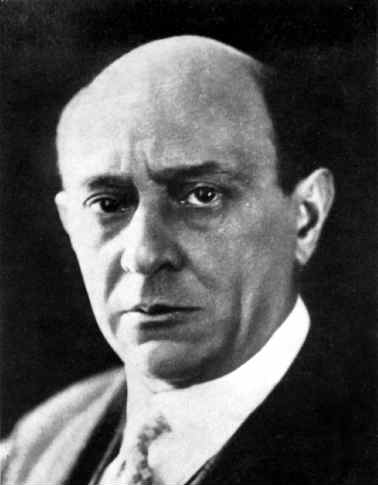 "Arnold Schoenberg (1874-1951) was particularly displeased with Thomas Mann for having presented Adrian Leverkuhn [the protagonist of Mann's novel Doctor Faustus (1947)] as the inventor of the dodecaphonic method without even mentioning Schoenberg's name. In Febuary 1948 Schoenberg sent Thomas Mann an article which he had composed for an imaginary 'Encyclopaedia Americana' for the year 1988. Writing under the pseudonym Hugo Triebsamen, he attempted to suggest the damage which he believed the character of Leverkuhn could well inflict upon his own subsequent reputation. The article presents Thomas Mann as a writer who was originally a musician and the true inventor of the dodecaphonic technique. The writer suffers in silence when a certain thieving composer called Schoenberg appropriates this discovery for himself. It is only in Doctor Faustus that the writer openly proclaims this spiritual-musical property as his own."
- from the notes on Theodor W. Adorno and Thomas Mann: Correspondence 1943-1955, ed. Christoph Godde and Thomas Sprecher, trans. Nicholas Walker
Mann later tried to placate Schoenberg but he did not succeed. The invention of real things is an interesting problem in fiction: I had always wondered about The Hudsucker Proxy, in which Tim Robbins' character "invents" the hula hoop, but Wikipedia reveals that although the Wham-O toy company repopularised the hula hoop in the late 50s, they were unable to patent it because it had been in use for thousands of years.
The letters also reveal that Mann lived long enough - by about a year - to see, and dislike, the original Paris production of Waiting For Godot. "I cannot help feeling some anxiety for the society that finds acclaimed expression in such a work."
Monday, February 09, 2009
 Read this extraordinary paragraph, appropriately enough, on the train into work today:
"It was now full winter, and barbarous how raw; so going around the city on the spidery cars, rides lasting hours, made you stupid as a stoveside cat because of the closeness inside; and htere was something fuddling besides in the mass piled up of uniform things, the likeness of small parts, the type of newspaper columns and the bricks of buildings. To sit and be trundled, why you see: there's a danger in that of being a bobbin for an endless thread or bolt for yard goods; if there's not much purpose anyway in the ride. And if there's some amount of sun in the dusty weep marks of the window, it can be even worse for the brain than those iron-deep clouds just plain brutal and not mitigated. There haven't been civilizations without cities. But what about cities without civilizations? An inhuman thing, if possible, to have so many people together who beget nothing on one another. No but it is not possible, and the dreary begets its own fire, and so this never happens."
- The Adventures of Augie March by Saul Bellow
(For comparison, try this great article about commuting from the New Yorker.)
Subscribe to:
Posts (Atom)